
The Hidden Gutters of Historic Homes: What You Need to Know
What are Yankee gutters is a question many historic homeowners find themselves asking when they discover an unusual drainage system built directly into their roofline. Here’s the short answer:
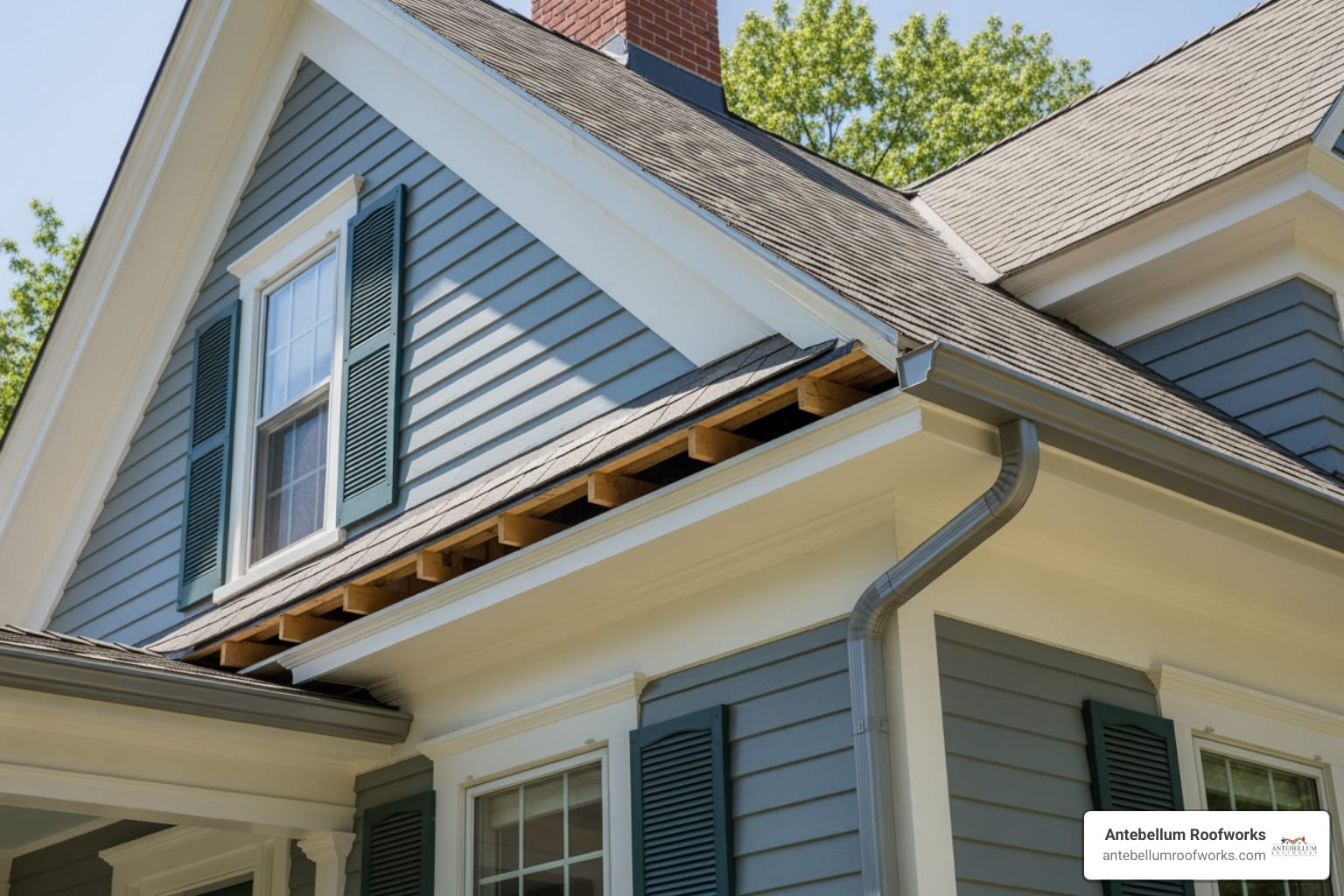
Yankee gutters (also called Philadelphia, pole, flush, or standing gutters) are built-in wooden troughs lined with metal — typically copper or terne-coated steel — integrated directly into the roof structure rather than attached to the fascia. They collect and channel rainwater invisibly along the roofline, draining through concealed downspouts.
Key facts at a glance:
- Also known as: Philadelphia gutters, pole gutters, flush gutters, standing gutters
- Construction: Wood shell lined with copper, terne-coated steel, or lead-plated tin
- Channel width: Up to 12 inches wide
- Depth: Typically 1–2 inches deep
- Common on: Colonial, Georgian, Victorian, and Craftsman-style historic homes
- Origin: 18th century, most prevalent in the Northeastern United States
These gutters are elegant, historically significant — and often misunderstood. If you own a historic home and require expert roofing services in Middle Tennessee, the team at Antebellum Roofworks works with property owners across the region who discover built-in gutter systems during inspections or renovations — often for the first time.
I’m Kevin Heithcock, owner of Antebellum Roofworks, and with 30 years of hands-on roofing experience — including custom sheet metal fabrication for historic and period-style properties — I’ve seen what are Yankee gutters capable of when properly maintained, and what goes wrong when they’re not. If you have questions about your historic roof, you can reach our team at (615) 794-9111. In the sections below, I’ll walk you through everything you need to know about identifying, maintaining, repairing, or replacing this distinctive piece of architectural history.
What are Yankee Gutters?
To the untrained eye, a house with Yankee gutters might look like it has no gutters at all. That is exactly the point. These systems were designed to handle the practical necessity of water management without disrupting the clean, often ornate lines of a home’s cornice or eaves.
In our work as roofers in Franklin, TN, we often encounter these on older estates in Franklin and surrounding areas where architectural integrity is paramount.
Defining the Yankee Gutter System
A Yankee gutter is essentially a “board-on-roof” system. Unlike modern K-style gutters that hang off the edge of the roof, Yankee gutters are built on the plane of the roof itself. They are often referred to by several regional names, including Philadelphia gutters, pole gutters, flush gutters, or standing gutters.
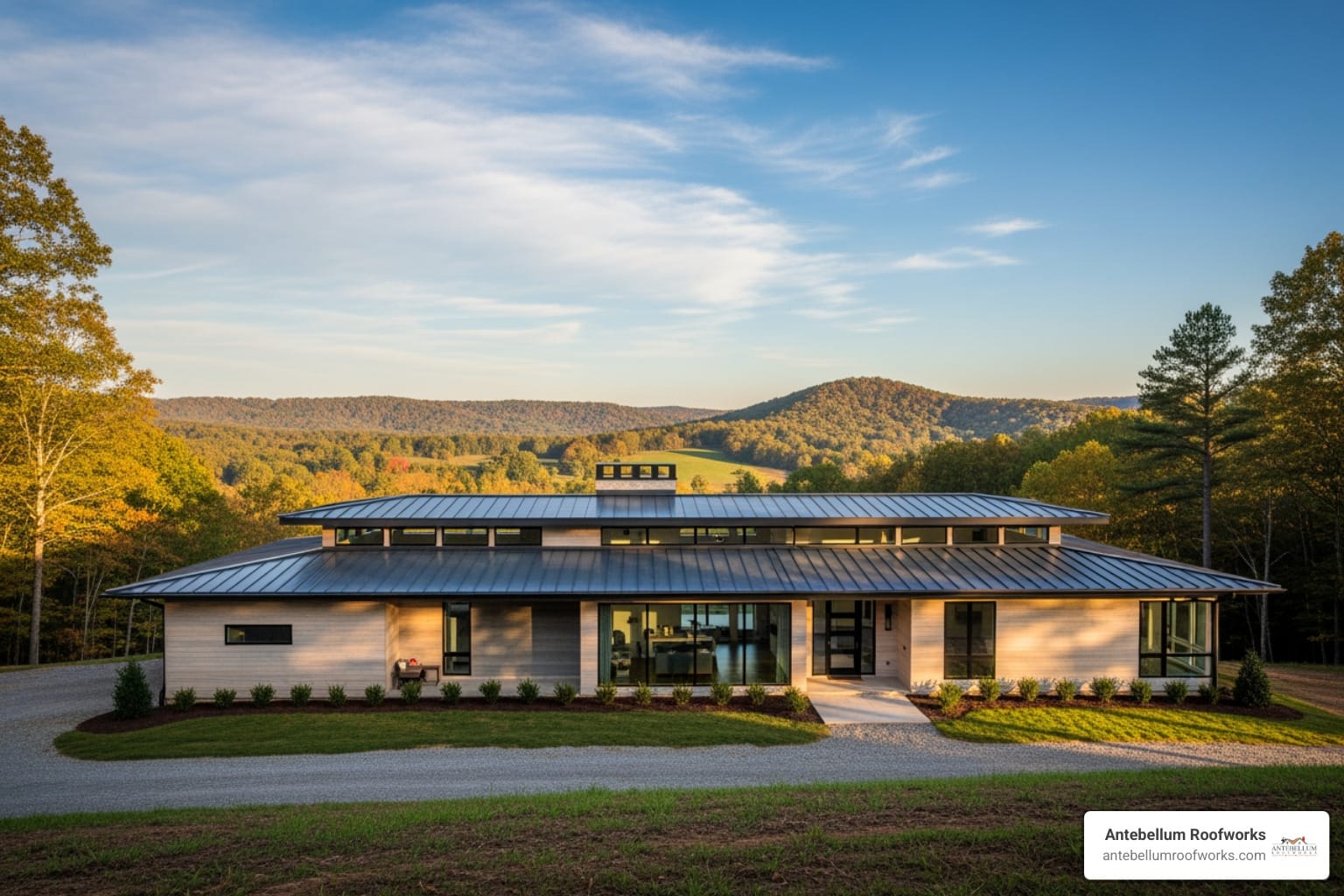
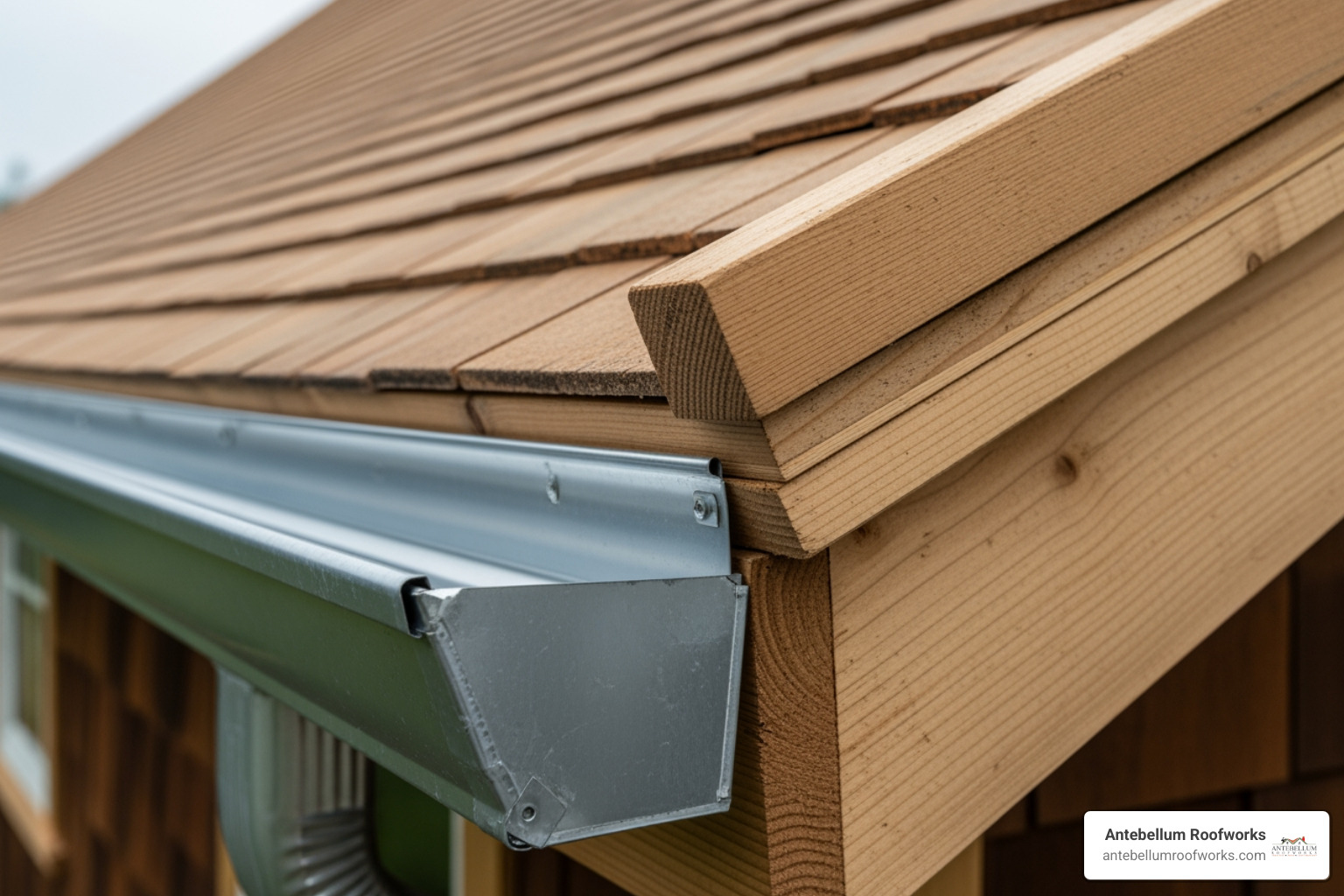
The system works by placing a wooden board at a right angle to the roof slope, supported by brackets. This creates a “V” or “U” shaped trough that sits just above the eave. Because they are integrated into the roof, they allow for a completely concealed drainage solution. On Craftsman-style homes, this is particularly prized because it leaves the beautiful, exposed rafter tails visible and unobstructed.
Construction and Materials of Yankee Gutters
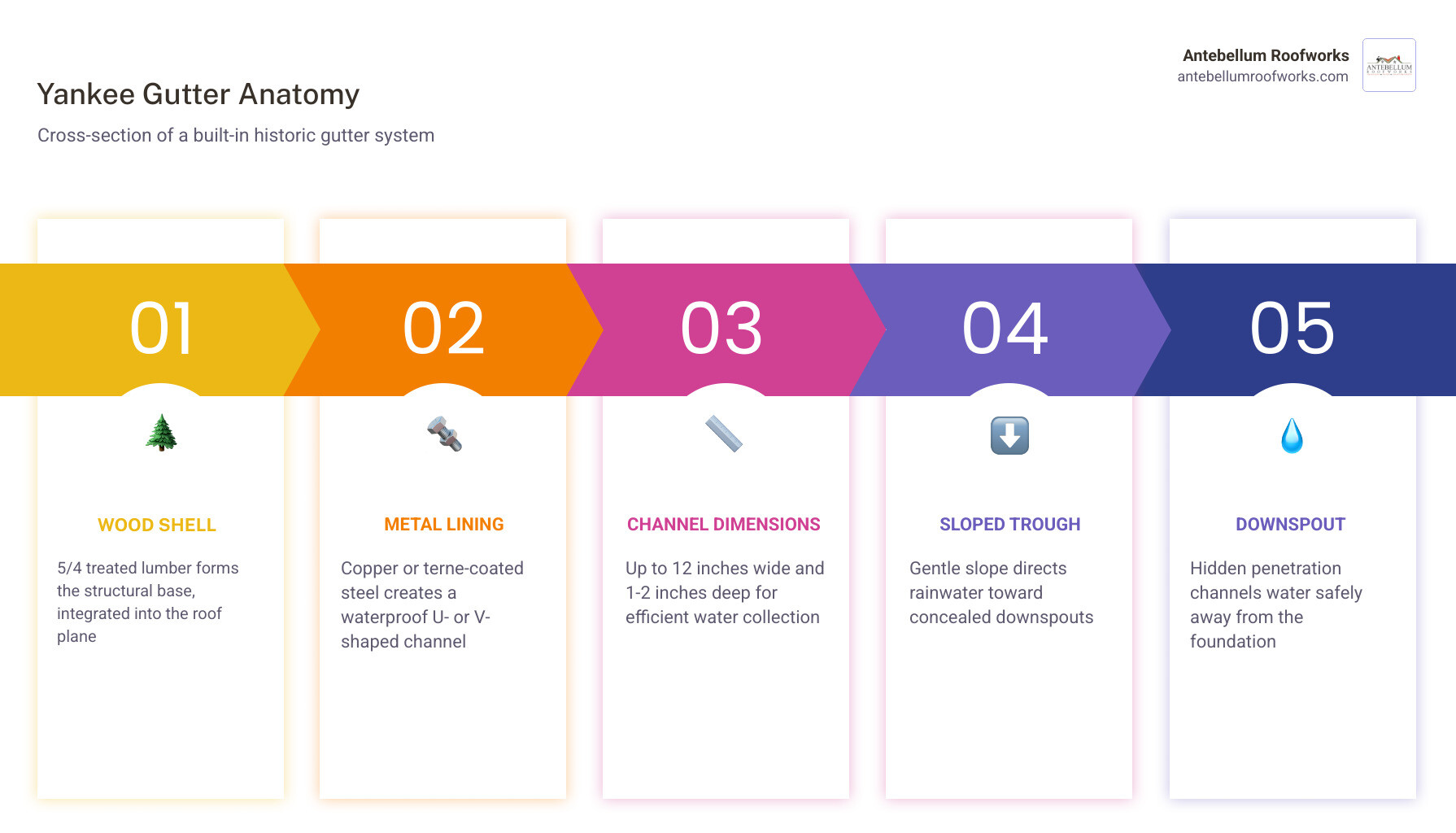
The “skeleton” of a Yankee gutter is typically made from a wood shell, often using 5/4 treated lumber or molded ornamental pine or oak. This wooden trough is then lined with a waterproof metal membrane to prevent the wood from rotting and the house from leaking.
Historically, these linings were made of:
- Copper: The gold standard for longevity, often favored in the 19th century.
- Terne-coated steel: A steel base coated with a lead-tin alloy (or modern zinc-tin versions).
- Lead-plated tin: Common in very old 18th-century applications.
The joints in these metal linings were traditionally soldered together to create a continuous, watertight seal. The channel itself is surprisingly wide—often up to 12 inches—but shallow, usually only 1 to 2 inches deep. This wide profile helps prevent clogs from smaller debris, though it requires a precise slope to ensure water actually makes it to the downspout. For a deeper look at how these were traditionally framed, you can explore this detailed guide on Victorian house gutters.
Historical Context and Architectural Significance
Understanding what are yankee gutters requires a trip back to the 18th and 19th centuries. Before the mass production of metal hanging gutters, builders had to get creative. They integrated drainage into the “entablature”—the fancy word for the horizontal superstructure of moldings and bands that sit atop a wall.
Aesthetic Benefits of the Yankee Style
In classical architecture, the gutter wasn’t an afterthought; it was part of the design. Specifically, the “cyma” or “cymatium” (the topmost molding of a cornice) often doubled as the gutter. You can learn more about how these elements fit together in this article on classical entablature and the cymatium.
By hiding the gutter inside the cornice or on the roof plane, architects could maintain a sharp, clean roofline. This was essential for:
- Colonial and Georgian Styles: Where symmetry and clean lines were king.
- Greek Revival: Where the heavy, ornamental cornices were the star of the show.
- Victorian Row Houses: Where space was tight and exterior attachments could be easily damaged.
Regional Prevalence and Evolution
While Yankee gutters are most famously associated with the New England seacoast and the historic brownstones of the Northeast, they traveled wherever high-style architecture went. In Middle Tennessee, we see them on historic farmhouses and urban residences that were built to mimic these grander styles.
However, by the 1950s, the industry shifted. The invention of seamless aluminum and the popularity of the K-style gutter (which was cheaper and easier to install) led many homeowners to abandon their built-in systems. Unfortunately, “abandoning” often meant just roofing over them, which created a whole new set of problems we still deal with today in Franklin, TN.
Maintenance and Repair: Preserving the “Philadelphia” Style
If you are lucky enough to have functional Yankee gutters, maintenance is your best friend. Because these gutters are built into your roof, a leak isn’t just a puddle on the sidewalk—it’s water inside your walls or rotting your rafters.
Common Challenges with Yankee Gutters
The biggest enemy of the Yankee gutter is neglect.
- Corrosion: Terne-coated steel linings are not “set it and forget it.” They need to be checked for rust and recoated approximately every eight years.
- Structural Rot: If the metal lining fails, the wooden trough underneath begins to rot. This can spread to the soffits, fascia, and even the interior framing.
- Ice Damming: In colder snaps, the shallow depth of Yankee gutters makes them prime candidates for ice dams, which can force water up under the shingles.
- Safety Hazards: There is actually a significant firefighter safety hazard associated with these. If the wood rots out but is covered by roofing material, it creates an “unsupported” area near the edge of the roof that can collapse under a person’s weight.
Recommended Repair Methods
We don’t recommend the “slap some roofing tar on it” approach. Tar dries out, cracks, and actually traps moisture against the metal, accelerating rust. Instead, we use a combination of modern tech and traditional craft:
- Wood Petrifier: For wooden troughs that have some soft spots, a wood petrifier can harden the fibers back into a rock-like state.
- Liquid Rubber Membranes: Products like Acrymax elastomeric coatings are fantastic for relining metal troughs. They create a seamless, flexible, waterproof barrier that moves with the metal as it expands and contracts.
- Copper Flashing: If the lining is beyond repair, we often custom-fabricate new copper liners. Copper is naturally rust-resistant and can last for over 50 years with proper care.
| Material | Maintenance Requirement | Lifespan |
|---|---|---|
| Terne-Coated Steel | Recoat every 8 years | 30-50 years (with care) |
| Copper | Occasional cleaning | 50+ years |
| Aluminum (Modern) | Cleaning only | 20-30 years |
Modern Alternatives: Replacing Yankee Gutters with Seamless Systems
Sometimes, the cost of rebuilding a rotted Yankee gutter is simply too high, or the homeowner wants a more “modern” level of protection. In these cases, we look at conversion or replacement options.
Why Choose Copper for Historical Homes?
If you’re moving away from a built-in system but want to keep the “old world” charm, copper is the answer. It is the most suitable choice for historical homes because it bridges the gap between modern functionality and period-correct aesthetics.
- The Patina: New copper is shiny and bright, but it eventually turns a deep brown and then a beautiful sea-foam green (verdigris). This green patina takes about 25 to 30 years to develop fully, but it acts as a protective layer for the metal.
- Durability: Unlike aluminum, copper doesn’t rust, and its soldered joints are much stronger than the caulked seams of modern gutters.
Installation Considerations for Replacements
Converting from a Yankee gutter to an exterior gutter isn’t as simple as nailing a new trough to the house. It usually requires:
- Roof Deck Extension: We often have to remove the old gutter board and extend the roof decking out to the edge of the eave.
- Eave and Soffit Rebuilding: Because Yankee gutters are integrated, removing them often leaves the eaves “open.” We have to rebuild the wood trim to ensure the house is sealed.
- Choosing the Style: For historic homes, we almost always recommend half-round gutters. They look much more “at home” on a 19th-century house than the boxy K-style gutters you see on modern subdivisions. You can find more about these options on our gutters page.
Frequently Asked Questions about Yankee Gutters
Can Yankee gutters be eliminated or converted?
Yes, and for many homeowners in Middle Tennessee, this is the most practical long-term solution. The process involves removing the standing gutter board, repairing any rot in the rafters or soffits, extending the roof shingles to the very edge of the house, and then installing a high-quality exterior gutter system. This eliminates the risk of water leaking directly into the home’s structure.
How do Yankee gutters function to drain water?
They rely on a very slight slope built into the wooden trough. Rainwater falls off the roof into the metal-lined channel, flows toward a “drop” or “outlet,” and then travels through a downspout. Interestingly, in many Yankee systems, the downspouts are actually built inside the walls of the house or tucked behind the trim, which can be a major leak risk if they aren’t inspected regularly.
What are the signs that a Yankee gutter needs replacement?
Keep an eye out for:
- Peeling paint on your soffits or fascia boards.
- Darkened or moist wood in your attic near the eaves.
- Interior wall leaks that seem to happen during heavy rain but aren’t near a window.
- Visible rust or holes in the metal lining when looking down from a ladder.
- Damaged masonry or “spalling” (flaking brick) where the roof meets the wall.
Conclusion
What are Yankee gutters? They are a testament to the craftsmanship of a bygone era—a clever, invisible way to protect a home from the elements while highlighting its architectural beauty. Whether you want to restore your historic Philadelphia-style gutters to their former glory or you’re ready to convert to a high-performance copper system, the right expertise makes all the difference.
At Antebellum Roofworks, we specialize in the unique needs of Middle Tennessee’s historic and high-end properties. We understand that a gutter isn’t just a piece of metal; it’s a vital part of your home’s defense system.
If you suspect your historic drainage system is failing, or if you just want an expert eye to take a look, don’t wait for the next big storm. Visit our gutters service page to schedule a consultation. Let’s keep your piece of history dry and beautiful for the next hundred years.