
Metal Roofing in East Tennessee: 9 Data-Backed Reasons Homeowners Are Upgrading Now
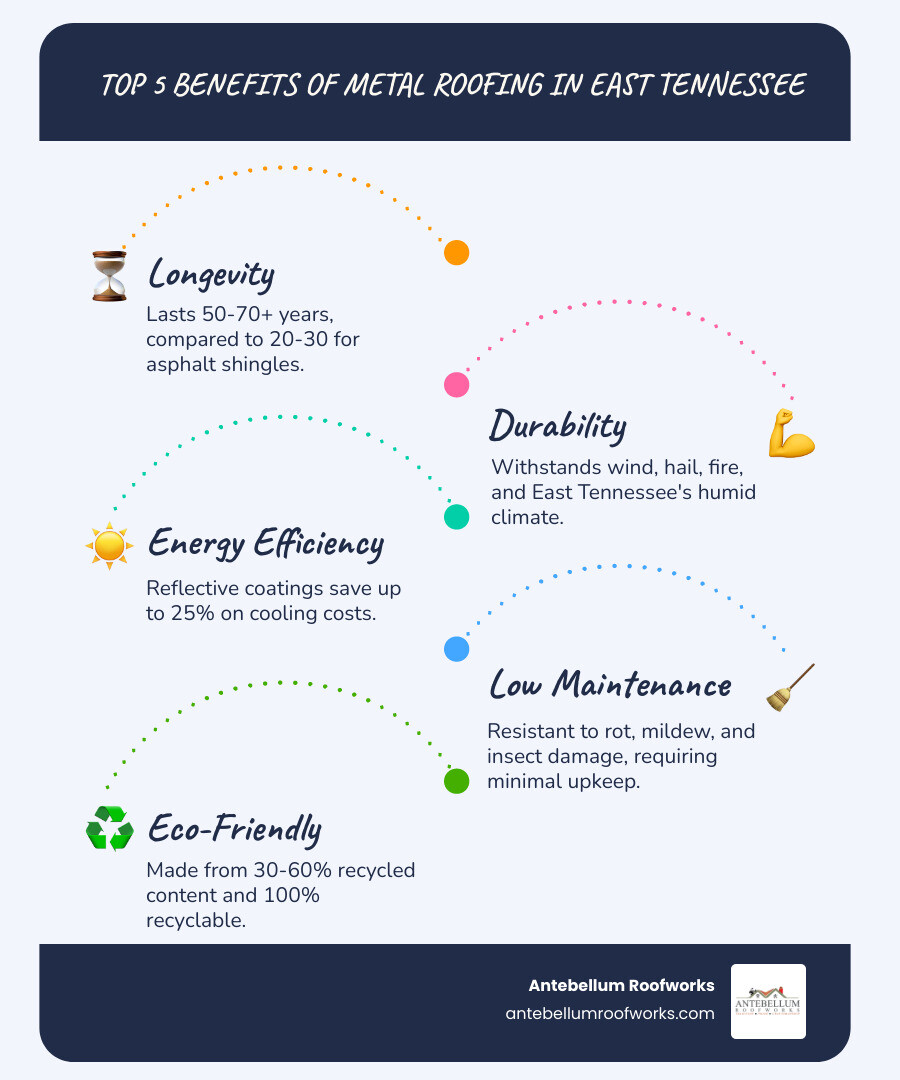
East Tennessee homeowners are choosing metal roofing because it delivers long service life, strong storm performance, and measurable energy savings in a humid, high-rainfall region. A properly installed metal roof routinely lasts 50–70+ years, which is 2–3x longer than typical asphalt shingles (often 20–30 years). Many ENERGY STAR–rated reflective metal systems can cut peak cooling demand, and studies commonly report up to ~25% cooling-cost reduction in hot seasons when paired with good ventilation and insulation. For homeowners ready to invest in a high-performance roof, a trusted metal roofing specialist can evaluate panel type, underlayment, and flashing details specific to your property. Call (615) 794-9111 to schedule an inspection or estimate.
Quick Answer: Top Metal Roofing Options in East Tennessee
- Standing Seam: Premium weather protection with concealed fasteners ($10–$15/sq ft)
- Tuff Rib/Exposed Fastener: Economical and durable for traditional styles ($5.50–$7.50/sq ft)
- Metal Shingles: Classic look with metal durability ($8–$12/sq ft)
- Average Total Cost: $15,000–$45,000 for a typical home
- Lifespan: 50–70+ years, compared to 20–30 for asphalt shingles
- Energy Savings: Up to 25% reduction in cooling costs
A metal roof is also a sustainability upgrade. The Metal Roofing Alliance reports that metal roofing commonly contains 30–60% recycled content and is 100% recyclable at end of life. In many cases, metal can be installed over an existing roof (when code allows and the deck is sound), reducing tear-off waste headed to landfills.
Wind, Hail, Humidity, and Ice: Why Metal Outperforms Every Other Roof in East Tennessee
A metal roof is one of the most resilient building materials available and is uniquely suited to protect homes against East Tennessee’s environmental demands. Its durability provides peace of mind through heavy thunderstorms, high winds, and the humid conditions that accelerate deterioration in many other roofing materials.
-
Weather Resistance: Interlocking metal panels create a continuous, weather-tight barrier that resists wind uplift, wind-driven rain, hail impacts, and fire. Metal is non-combustible, which means it delivers inherently higher fire resistance than asphalt-based roofing. According to the Insurance Institute for Business & Home Safety (IBHS), metal roofing systems rated for 110+ mph wind speeds significantly reduce storm damage claims.
-
Longevity: A professionally installed metal roof commonly lasts 50 to 70+ years, which is two to three times longer than conventional asphalt shingles. Over a 60-year period, an asphalt roof often requires two full replacements, while a quality metal system can remain in service with routine inspections.
-
Low Maintenance: Metal does not absorb moisture, so it is resistant to rot, mildew, and insect damage—a critical advantage in Tennessee’s humid climate. Long-term performance is best protected with periodic professional evaluations. (Call (615) 794-9111 to schedule.)
-
Durability: Metal roofing is engineered for long-term UV exposure and temperature swings. Properly detailed systems accommodate thermal expansion and contraction without compromising seams, penetrations, or flashings. In higher elevations, metal also sheds snow and ice efficiently, reducing the risk of heavy loading and ice dam-related leaks.
Standing Seam vs. Exposed Fastener vs. Metal Shingles: Which Profile Fits Your Tennessee Home?
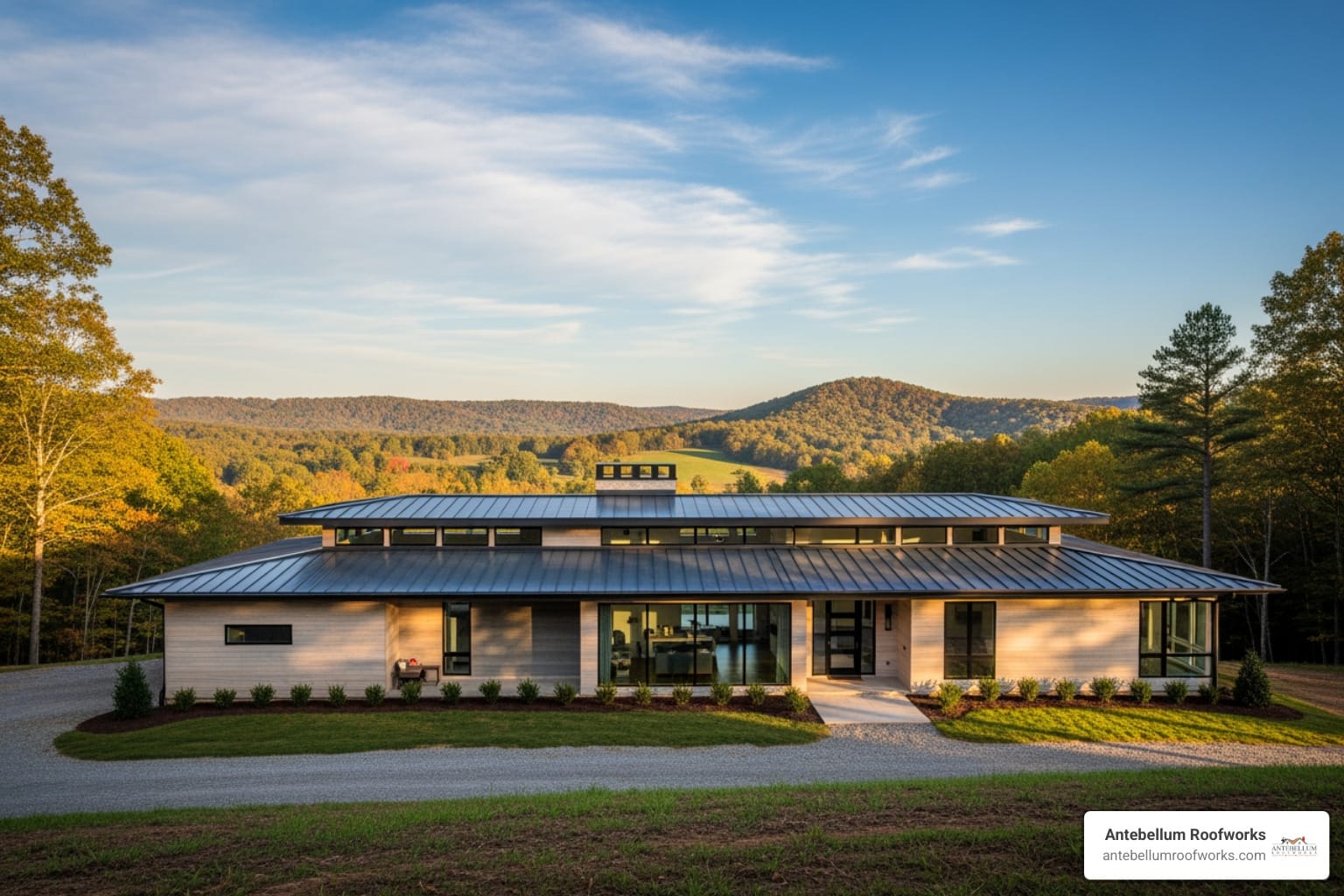
Modern metal roofing offers a wide array of choices to complement any architectural style, from rustic cabins in the Cumberland Mountains to contemporary homes in Knoxville and the Tri-Cities. Homeowners can select from various materials and profiles to achieve their desired look and performance, and the right combination of metal type and panel profile can optimize both curb appeal and structural resilience.
Common Materials for Metal Roofing in Tennessee
-
Steel: Galvanized or Galvalume steel is the most common choice, offering an excellent balance of durability and cost-effectiveness. Protective metallic coatings such as zinc or zinc-aluminum alloys significantly slow corrosion, which is especially important in humid or tree-covered settings.
-
Aluminum: Lightweight and naturally rust-proof, aluminum is a strong option for its corrosion resistance, particularly in areas with higher humidity or near bodies of water. It is also highly recyclable, which makes it attractive for homeowners prioritizing sustainable construction.
-
Copper: A premium material that develops a distinctive patina over time, copper roofing offers unparalleled longevity and a timeless appearance. Historical buildings have demonstrated that properly detailed copper roofs can last well over a century with minimal maintenance.
Popular Styles for Tennessee Architecture
-
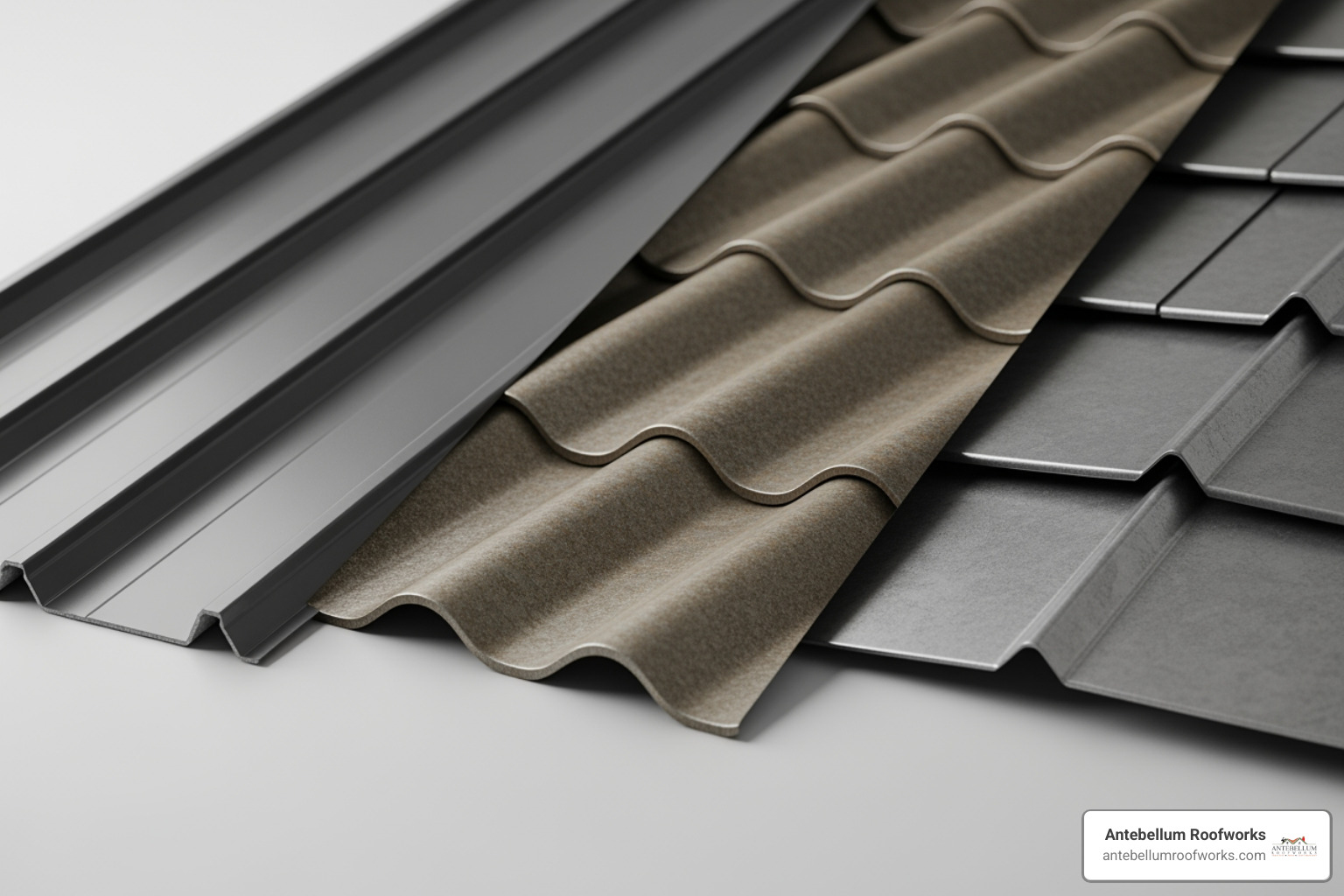
Standing Seam: Characterized by clean, vertical lines and concealed fasteners, this is a popular choice for both modern and traditional homes for its superior weather resistance and sleek aesthetic. The raised seams protect critical fasteners from direct weather exposure, improving long-term performance.
-
Exposed Fastener (Tuff Rib): An economical and durable option often seen on barns, workshops, and rustic-style homes, offering a classic, agricultural look. Panels are secured directly to the roof deck with visible fasteners, which keeps installation costs lower while still delivering strong protection when installed correctly.
-
Metal Shingles/Shakes: These systems mimic the look of traditional asphalt shingles, slate, or wood shakes while providing the superior durability and lifespan of metal. Many projects require custom sheet metal work around valleys, chimneys, and walls to ensure a precise fit and long-term water tightness.
Metal Roof Cost in Tennessee: Full Price Breakdown for 2024–2025
In Tennessee, metal roofing is best evaluated as a long-term investment rather than a short-term expense. While the initial cost per square foot is higher than asphalt, the combination of extended lifespan, reduced maintenance, and potential energy savings often results in a lower total cost of ownership over time. Independent cost analyses consistently show that durable building assemblies, such as metal roofs, reduce lifecycle costs when measured over 40 to 60 years.
While the initial investment for a metal roof is higher than for asphalt shingles, its exceptional lifespan and low maintenance make it a more cost-effective choice over the long term. In Tennessee, the cost of a metal roof typically ranges from $15,000 to $45,000, or $7.50 to $22.50 per square foot, depending on several key factors.
-
Material Choice: Premium materials like copper or zinc are more expensive than steel or aluminum. Galvanized steel might cost $3.50-$6.50 per square foot for materials, while copper can be $14-$25 per square foot.
-
Roof Complexity: Roofs with steep pitches, multiple valleys, dormers, or skylights require more labor and custom materials, increasing the overall cost. Complex geometry generally requires more flashing details and custom fabrication.
-
Installation Method: Standing seam installations generally cost more than exposed fastener systems due to the specialized labor involved and the precision required for seaming and flashing. Mechanically seamed systems offer improved water tightness, which is reflected in their higher price point.
-
Labor Costs: Professional installation in Tennessee typically costs between $5.50 and $15.00 per square foot, depending on the system type, roof complexity, and access conditions.
Additional Expenses to Consider:
- Permits: Typically $250 to $500.
- Old Roof Removal: Can add $1,000 to $5,000 if required.
- Decking Repairs: Damaged decking may need repairs, costing $2 to $5 per square foot.
- Underlayment: High-quality underlayment costs around $1 to $1.30 per square foot and plays a critical role in secondary moisture protection.
To illustrate the long-term value, consider this comparison:
| Feature | Metal Roofing | Asphalt Shingles |
|---|---|---|
| Initial Cost | Higher ($8.00-$14.00/sq ft) | Lower ($4.50-$7.00/sq ft) |
| Lifespan | 50-70+ years | 20-30 years |
| Lifetime Value | Excellent (fewer replacements, energy savings, low maintenance) | Moderate (multiple replacements, higher maintenance over time) |
The extended lifespan, minimal maintenance, and energy savings of a metal roof result in a lower total cost of ownership over the decades. According to Remodeling Magazine’s Cost vs. Value Report, homeowners recoup a significant portion of their metal roofing investment at resale, with national averages showing strong cost-recovery percentages for high-quality metal roof upgrades.
Up to 25% Cooling Savings: How Metal Roofs Cut Energy Bills in Tennessee Summers
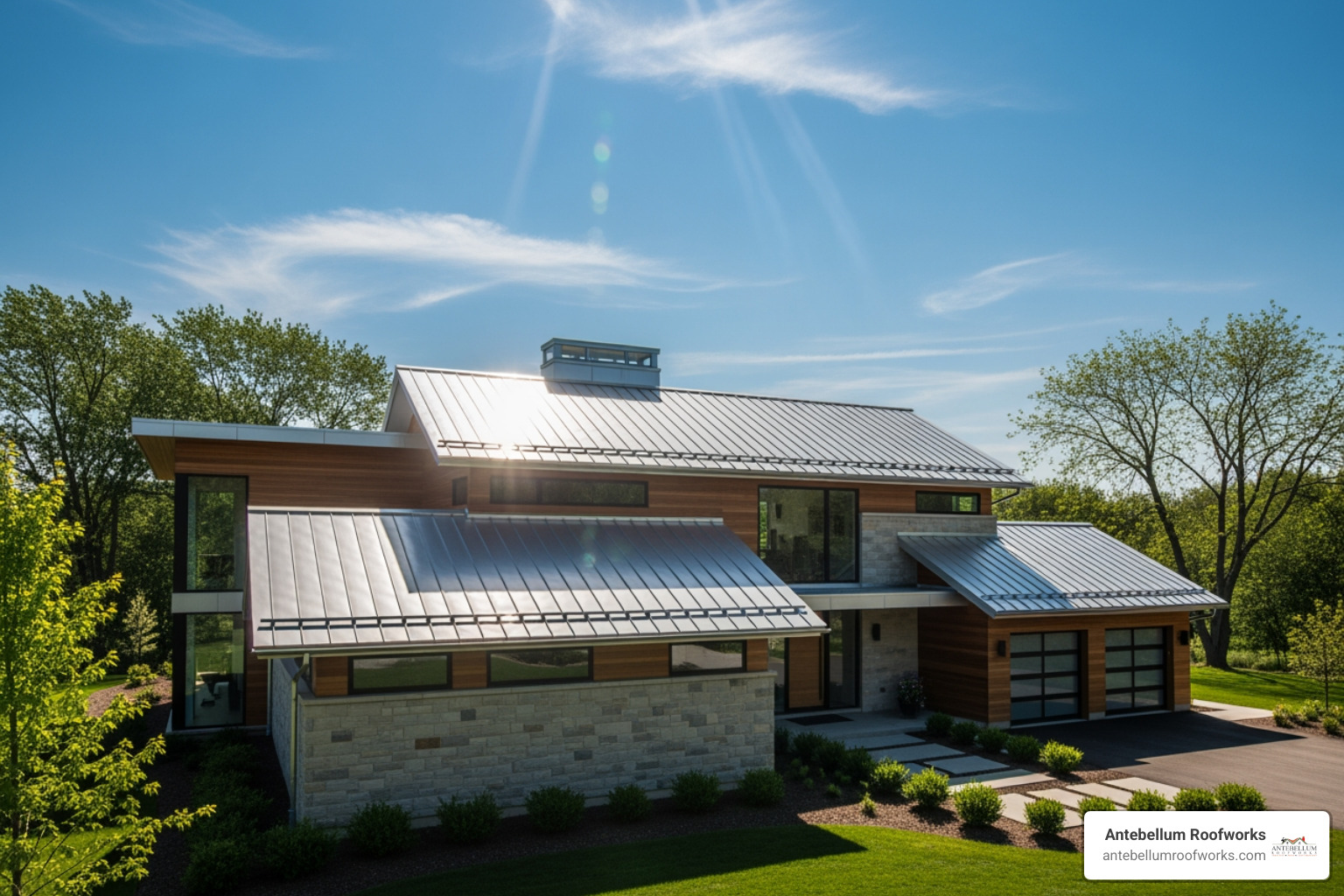
A metal roof directly contributes to lower energy bills and a smaller environmental footprint, which is particularly valuable during hot Tennessee summers and increasingly volatile weather patterns. Reflective finishes and ventilated roof assemblies help stabilize attic temperatures, which can reduce peak cooling loads and extend the life of HVAC equipment. These performance advantages are measurable and have been documented in building energy studies across multiple climate zones.
-
Cool Roofing: Many metal roofing products are ENERGY STAR certified, featuring reflective coatings that lower roof surface temperature and reduce the energy needed to cool your home. These specialized coatings are designed to reflect a significant portion of the sun’s radiant energy, preventing heat buildup in your attic and living spaces. This “cool roof” effect can reduce cooling costs by up to 25% compared to dark, heat-absorbing shingles during long Tennessee summers.
-
Sustainability: Metal roofs are made with a high percentage of recycled content (typically 30-60%) and are 100% recyclable at the end of their long service life, minimizing their environmental impact. Unlike tear-offs of old asphalt shingles, which often go straight to landfills, decommissioned metal panels can be returned to the manufacturing stream as raw material for new products.
-
Installation Over Existing Roofs: In many cases, a lightweight metal roof can be installed directly over an existing shingle roof, reducing the cost and environmental impact of tear-off and disposal. This approach retains the existing roofing layer as an additional thermal and acoustic buffer while avoiding the transport and dumping of thousands of pounds of old roofing materials.
Metal Roof Lifespan in Tennessee: 50–70+ Years With This Maintenance Schedule
In Tennessee, a professionally installed metal roof typically lasts 50 to 70 years, and premium systems can exceed that range when properly maintained. This service life is consistently two to three times longer than conventional asphalt shingles under similar weather exposure, which makes metal a preferred choice for homeowners seeking long-horizon performance.
To achieve this maximum lifespan, metal roofs require minimal but consistent maintenance:
- Periodic Inspections: Annual or bi-annual roof inspections are recommended to check for loose fasteners, damaged sealants, or debris accumulation. Inspections are especially important after major wind, hail, or ice events.
- Gutter Cleaning: Keeping gutters and downspouts clear is crucial to prevent water backup, which can cause corrosion or damage to the roof’s edge and fascia over time.
- Surface Cleaning: Occasional cleaning may be needed to remove dirt, tree debris, or algae, which helps maintain the roof’s appearance and reflective properties. Non-abrasive methods are recommended to protect factory finishes.
- Minor Repairs: Scratches or damage from impacts should be addressed promptly with touch-up paint or sealant to prevent larger issues. Addressing small defects early is one of the most effective ways to preserve metal coatings and extend roof life.
When these simple steps are followed, Tennessee homeowners consistently report decades of leak-free performance and stable curb appeal from their metal roofing systems.
Metal Roofing FAQ: Noise, Overlay Installation, and Lightning Safety
Clear, data-backed answers help homeowners evaluate metal roofing with confidence. The questions below address the most common concerns for East Tennessee properties and reflect real installation conditions rather than myths or outdated assumptions.
Is a metal roof noisy when it rains?
When installed over solid decking with proper insulation and an underlayment, a metal roof is generally no louder than any other roofing material during rainstorms. The combination of roof deck, underlayment, insulation, and interior finishes acts as an effective sound-dampening system. Many homeowners actually report that any audible rain sound is soft and pleasant rather than disruptive.
Can you install a metal roof over existing shingles?
Yes. In many jurisdictions, building codes permit installing a metal roof over a single layer of existing asphalt shingles. This can save on the cost and mess of a full roof replacement tear-off, but a professional should always inspect the underlying roof deck first. The deck must be structurally sound, properly fastened, and capable of supporting the new system. The existing shingles should lie flat to provide a stable base and to avoid telegraphing unevenness through the new panels.
Will a metal roof increase the chance of a lightning strike?
No. A metal roof does not increase the likelihood of a lightning strike compared to other roofing materials. Lightning is attracted to the highest point in an area, regardless of whether that point is covered with metal, asphalt, or another surface. In the unlikely event that lightning does strike a metal roof, the system is actually safer than combustible materials because metal is non-flammable and disperses electrical energy across a wider area, reducing ignition risk. The Metal Construction Association confirms that metal roofing presents no additional lightning risk.
How to Choose the Right Metal Roofing Installer: 4 Questions That Reveal Quality
Choosing a metal roof is a major long-term investment, and installation quality determines whether the roof reaches its full service life. The best contractors document their system details, follow manufacturer specifications, and use purpose-built flashings at valleys, walls, chimneys, and penetrations.
When selecting a contractor, evaluate these essentials:
- Metal-Specific Experience: Ask how many standing seam or exposed-fastener projects they complete each year and request addresses or photos from comparable jobs.
- Credentials and Reviews: Verify licensing and insurance, and confirm reputation through consistent, recent reviews on platforms like Google and the Better Business Bureau.
- Scope Transparency: A professional proposal should specify panel profile, gauge, coating, underlayment, ventilation approach, flashing metals, and fastener type, along with cleanup and disposal.
- Warranties in Writing: Compare both manufacturer product warranties and workmanship coverage. Metal roofs succeed or fail at the details; workmanship terms matter.
For homeowners evaluating a high-performance system, Antebellum Roofworks installs dedicated steep-slope metal systems designed for Tennessee conditions. Learn more about our lifetime metal roofing systems. To schedule an on-site assessment, call (615) 794-9111.
Metal Roof Warranty Guide: What 30-Year, 50-Year, and Lifetime Coverage Actually Means
Metal roofing warranties in Tennessee typically include two distinct protections: coverage for the manufactured products themselves and coverage for the installation workmanship. Understanding how these warranties work together allows homeowners to accurately compare bids and assess the true long-term value of a proposed roofing system.
-
Manufacturer Product Warranties: These cover the metal panels and their coatings against defects, chalking, and fading for a defined period. Standard painted steel systems often include 30- to 50-year finish warranties, and some premium products offer limited lifetime coverage. Many manufacturer warranties are transferable to a subsequent owner for at least one transfer, which can increase a home’s resale value.
-
Workmanship/Installation Warranties: Provided by the contractor, this warranty covers the quality of the installation itself, including how panels, flashings, and accessories were installed. These warranties can range from 5 years to a lifetime labor warranty. Longer workmanship warranties typically indicate that the contractor has confidence in both their crews and their installation practices.
Homeowners should review all warranty documents carefully, including any maintenance requirements or exclusions related to coastal exposure, panel contact with dissimilar metals, or improper roof penetrations. A reputable contractor will explain these details clearly and provide written documentation at project completion. For questions about warranty coverage on your project, call (615) 794-9111.
5 Steps to Finding a Qualified Metal Roofing Contractor in East Tennessee
Finding a reputable metal roofing installer in Tennessee requires deliberate research and clear evaluation criteria. Because metal roofing has different detailing requirements than asphalt shingles, the installer you choose should demonstrate specific expertise with metal systems rather than treating them as an occasional add-on service.
Here are key steps for locating a trustworthy professional:
- Check Online Reviews and Certifications: Look for companies with consistently high ratings on platforms such as Google and verify any industry or manufacturer certifications. These credentials indicate that the contractor has met training and performance standards for specific metal roofing products.
- Verify Local Experience: Prioritize contractors with an established local presence and a portfolio of completed metal projects in your area. Ask about experience with regional weather challenges such as wind-driven rain, heavy thunderstorms, and temperature extremes.
- Request Detailed Quotes: Obtain at least three itemized quotes to compare materials, labor costs, and scope of work. Clear proposals should specify panel type, gauge, coating system, underlayment, ventilation strategy, and warranty coverage.
- Confirm Licensing and Insurance: Always verify that the contractor is fully licensed and insured in Tennessee to protect yourself from liability. Request proof of general liability and workers’ compensation coverage before work begins.
- Schedule an On-Site Evaluation: A qualified installer will assess your roof deck, ventilation, and existing conditions before providing a final proposal. Avoid contractors who quote sight-unseen.
Following these steps will help you find a qualified professional who can install a long-lasting, code-compliant metal roof. For homeowners in the East Tennessee area, Antebellum Roofworks offers expert installation, thorough inspections, and a commitment to customer satisfaction rooted in years of local service. Call (615) 794-9111 to get started.