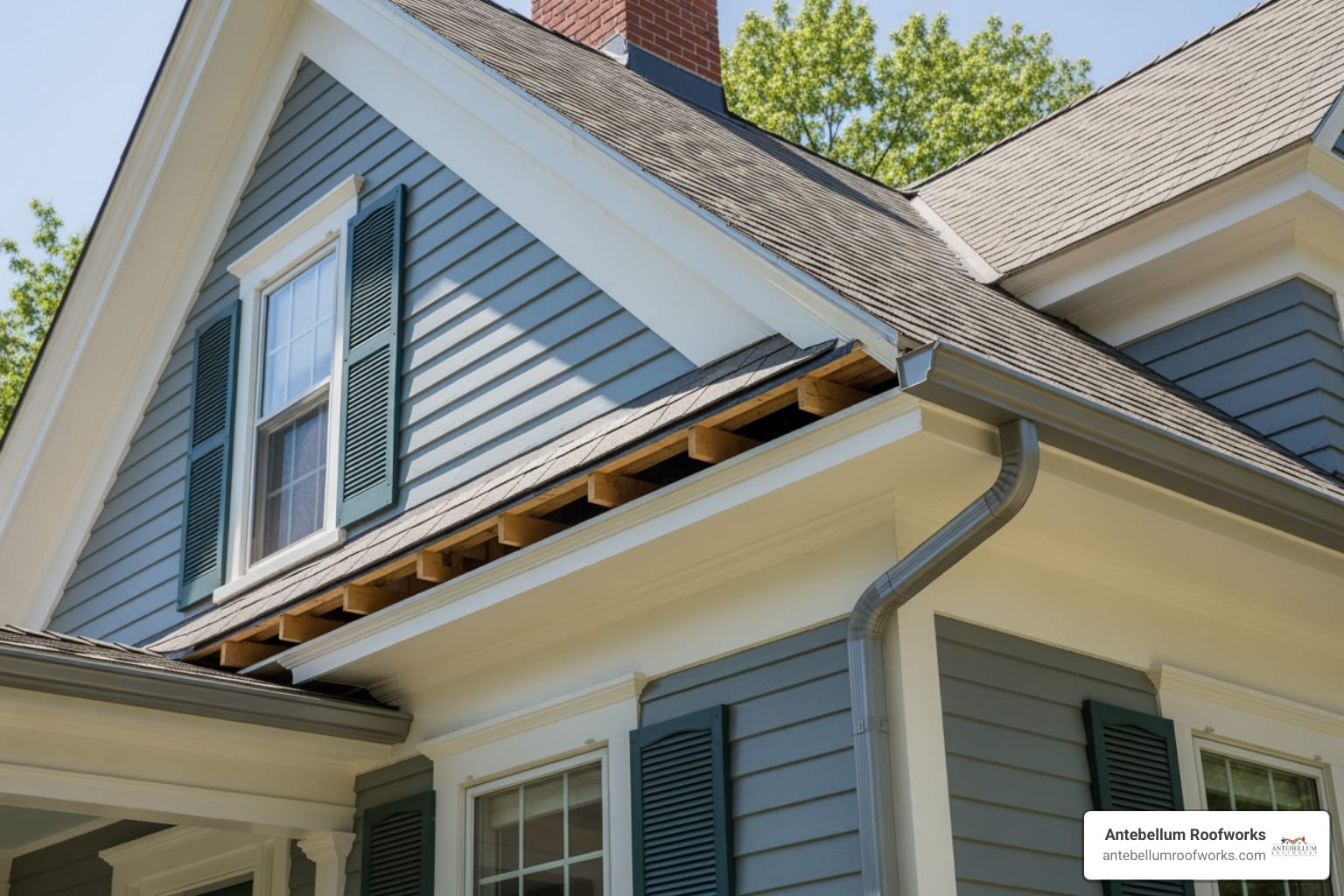

Roof Finial Installation: A Data-Backed Guide to Doing It Right
Roof finial installation is the process of securely attaching a decorative or functional ornament to the peak of your roof or cupola, typically by drilling a hole into solid wood, inserting a post, and sealing it with silicone caulk to prevent leaks. When this process is done to modern standards, finials can last 40–75 years with only minimal maintenance, comparable to the life expectancy of many high-quality roofing systems. Homeowners who integrate finial work into a broader, professional roofing service in Middle Tennessee typically see fewer leak-related repairs over the life of the roof.
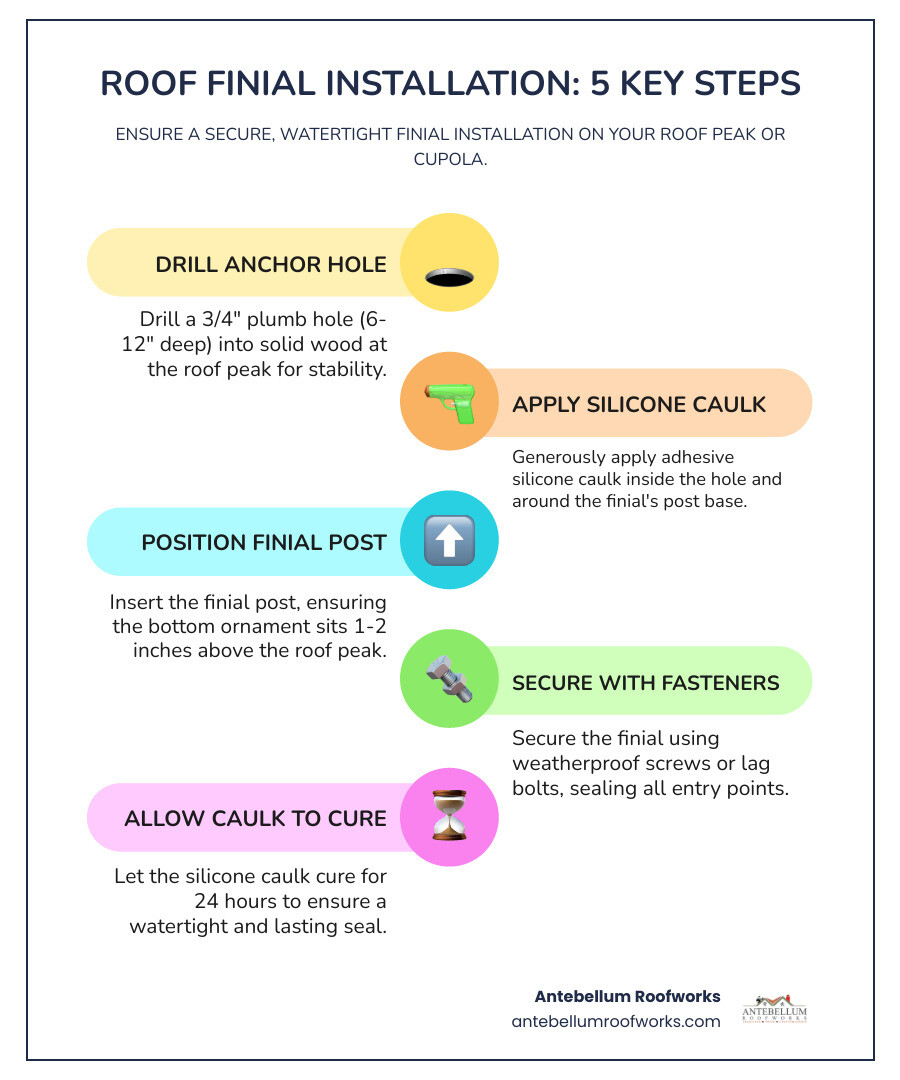
Quick Installation Overview:
- Drill a 3/4″ plumb hole into solid wood at the roof peak (6-12″ deep depending on finial size)
- Apply adhesive silicone caulk inside the hole and around the post base
- Insert the finial post ensuring the bottom ornament sits 1-2″ above the peak
- Secure with screws or lag bolts and seal all entry points
- Allow caulk to cure for 24 hours before completing assembly
These architectural crowning pieces serve both decorative and ventilation purposes, changing an ordinary roofline into something distinctive. Whether you’re restoring a historic home in Middle Tennessee or adding a custom touch to a new build, finials are custom-made parts that require careful installation to prevent water damage.
The challenge isn’t just aesthetic—it’s structural. A poorly installed finial can lead to leaks, rot, and costly roof repair down the line. According to industry standards, the most secure installation method involves anchoring directly into solid wood at your roof’s peak, with depths ranging from 6 inches for smaller finials to 12 inches for larger ornamental pieces.
Materials matter too. Copper, aluminum, zinc, and terracotta each offer different benefits for Tennessee’s variable climate, from hot summers to ice storms. The right choice depends on your home’s architecture, your budget, and whether you want a piece that ages gracefully with a natural patina or maintains its original finish.
If you’re planning a finial installation or need guidance on custom architectural elements, the team at Antebellum Roofworks can help. Call (615) 794-9111 to discuss your project with experienced craftsmen who understand both the beauty and the engineering behind these distinctive roof ornaments.
Pre-Installation Prep: Gathering Your Tools and Materials
Before you even think about climbing a ladder, proper preparation is the key to a smooth and safe installation. Having the right finial, tools, and safety gear on hand will prevent delays and ensure the job is done correctly the first time. We always emphasize this crucial first step, as it lays the foundation for a successful and lasting installation.
Choosing Your Finial: Materials and Styles
Finials are not one-size-fits-all. The material and style should complement your home’s architecture and withstand your local climate. From historical restorations to modern designs, the right finial can lift your home’s curb appeal.
-
Finial Materials
Finials can be crafted from a variety of durable materials, each with unique aesthetic and weathering properties suitable for Franklin, TN’s climate:- Copper: A classic choice, copper develops a beautiful green patina over time, adding a timeless elegance. It’s highly durable and weather-resistant.
- Aluminum: Lightweight and corrosion-resistant, aluminum can be powder-coated or painted in custom colors to match any home’s exterior.
- Zinc: Often found in European architecture, zinc offers a sophisticated, matte gray finish that weathers beautifully.
- Terracotta: Ideal for certain architectural styles, terracotta finials are often seen in decorative forms like gargoyles. They are crafted from frost-resistant concrete, as noted in some of our research, making them suitable for various climates.
- Wood: While less common for roof peaks due to weather exposure, wood finials are sometimes used on cupolas or sheltered areas and require regular maintenance.
- Steel (including Kynar steel/galvalume): Can be used, especially when custom colors are desired through powder coating or painting, offering robust weather protection.
-
Custom Designs; Decorative vs. Functional; Sizing (6-12 inch depth)
Finials serve both decorative and, in some cases, ventilation purposes. Custom-made finials allow for unique expression and perfect architectural harmony. We often work with homeowners to create bespoke pieces that reflect their personal style or the historical accuracy of their property. For instance, a simple 4-sided modern copper finial might suit a contemporary home, while an obelisk finial with a curved custom base could be a striking feature on a more traditional structure.When considering size, smaller finials typically have a 6-9 inch depth for their post, while larger finials require a 10-12 inch depth. The finial’s bottom-most ornament should ideally be about 1 to 2 inches above the roof peak or roof cap’s peak for optimal visual balance. For more information on creating unique architectural elements, explore our capabilities in custom sheet metal.
-
Mounting Hardware; Assembly Rods; Roof Mounts
The hardware is crucial for a secure installation. Most finials come with a finial figure and a black steel assembly rod. For roof installation, a dedicated roof mount is essential. These mounts vary by finial size:- For 24″ (Small) and 36″ (Medium) finials, a Small Steel Roof Mount (Item # DV901S) or Aluminum Roof Mount (Item # DV904) is typically used.
- For 48″ (Large) finials, a Large Steel Roof Mount (item # DV901L) is recommended.
- Interestingly, 12″ (Mini) finials often come complete with a roof mount, requiring no additional hardware.
Assembly rods sometimes have threaded tips, but these are solely for connecting additional rods if extra length is needed to bridge a gap between the finial and a mount within a roofline or cupola, not for screwing into the finial itself.
Essential Tools and Supplies for a Flawless Roof Finial Installation
Gathering your supplies beforehand prevents multiple trips up and down the ladder, which is not only inefficient but also increases safety risks. We always ensure our crews have everything they need before beginning work at heights.
-
Tools:
- Drill with bits: Essential for pre-drilling holes for mounting screws and the finial post.
- Caulking gun: For applying adhesive silicone caulk efficiently and evenly.
- Tape measure: For accurate measurements of finial placement and hole depth.
- Level: To ensure your finial is perfectly plumb and aesthetically pleasing.
- Ladder or scaffolding: Choose the appropriate equipment for safe access to the roof peak. Scaffolding offers a more stable work platform for extended tasks.
- Hacksaw: May be needed to trim assembly rods or finial posts to the correct length.
- Vise: Useful for holding assembly rods securely if trimming is required.
-
Supplies:
- High-quality adhesive silicone caulk: This is arguably the most critical supply for ensuring a watertight seal. We recommend using a clear, high-grade adhesive silicone caulk liberally.
- Weather-resistant screws or lag bolts: Stainless steel lag screws or copper-coated stainless steel screws are ideal for securing roof mounts and caps, offering superior corrosion resistance.
- Paint thinner: For cleaning up any excess wet silicone caulk, as it can be easily wiped away with a rag dampened with thinner.
Safety First: Working at Heights
Working on a roof is inherently dangerous. Never compromise on safety. Our team at Antebellum Roofworks prioritizes safety above all else, ensuring all necessary precautions are taken.
- Ladder Safety: Always use a sturdy ladder that extends at least three feet above the edge of the roof. Ensure it’s placed on firm, level ground and secured at the top. Never overreach.
- Scaffolding Best Practices: For more extensive work or when working for prolonged periods, scaffolding provides a much safer and more stable platform than a ladder. Ensure it’s erected by trained personnel and meets all safety standards.
- Weather Conditions: Never attempt a roof finial installation in inclement weather. Wind, rain, ice, or extreme heat can significantly increase the risk of accidents. A dry, calm day is always best.
- Personal Protective Equipment (PPE): Always wear appropriate PPE, including a hard hat, safety glasses, non-slip work boots, and gloves.
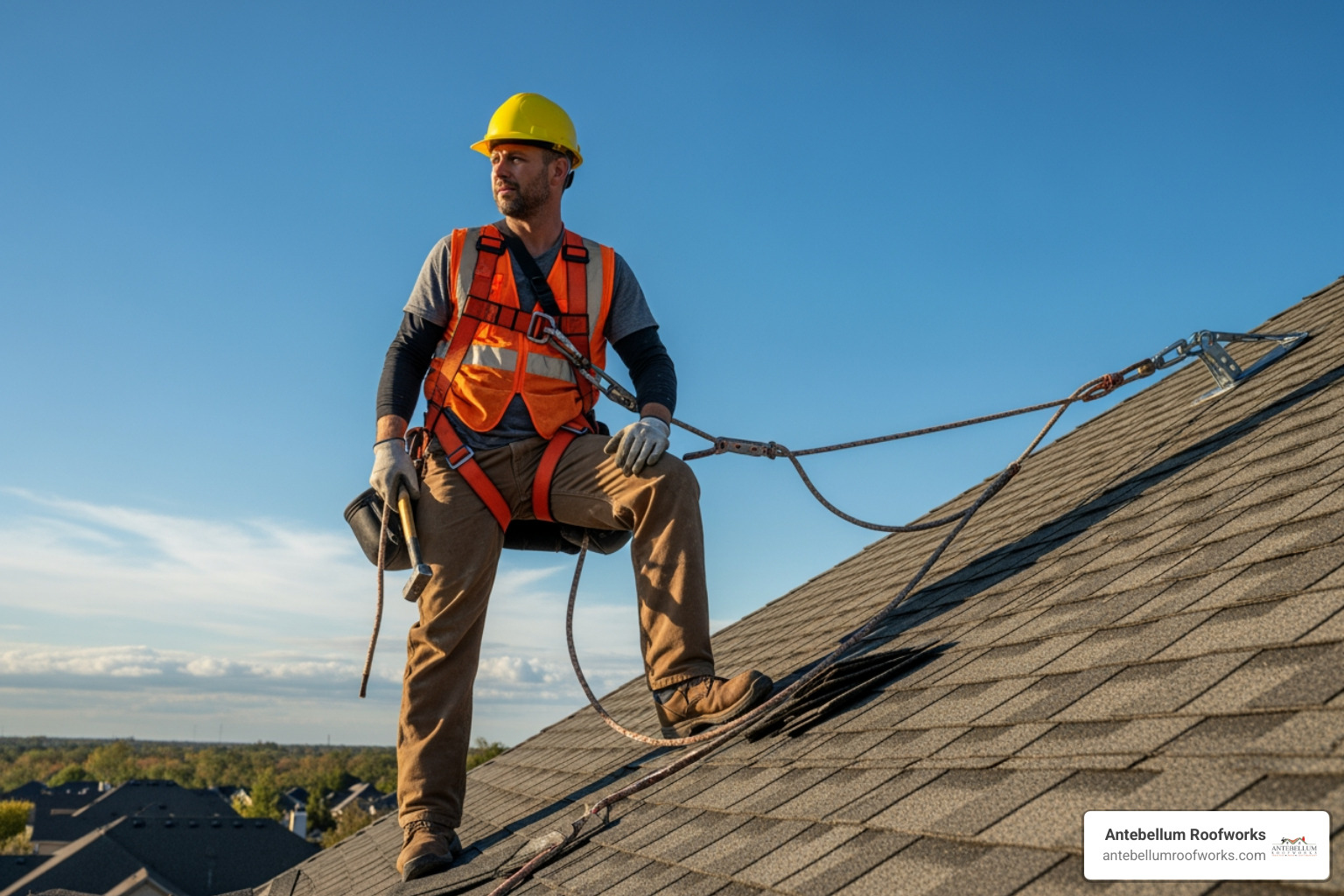
- Harness and anchor points: For any work on a pitched roof, a safety harness securely attached to a proper anchor point is non-negotiable. This prevents falls and is a standard practice for our professional roofers.
The Complete Guide to Roof Finial Installation
The installation method depends on where you’re placing the finial—on a roof peak or a cupola—and the type of finial you have. The most secure method involves anchoring a post into the roof’s structure, ensuring it’s plumb and watertight.
Method 1: Installing a Finial Directly on a Roof Peak
This is the most common method and provides a very stable base, suitable for most residential and commercial properties in Franklin, TN.
- Locating Solid Wood: The first and most critical step is to determine if there’s solid wood at the peak of your roof where the finial will be placed. This provides the necessary anchor for the finial’s post. If you’re unsure, it’s best to consult with a roofing professional.
- Drilling a Plumb 3/4″ Hole: Once solid wood is located, use a drill to create a 3/4-inch hole. This hole must be drilled perfectly plumb (straight up and down) to ensure the finial stands erect.
- Calculating Post Depth (10″-12″ for large finials): The depth of the hole depends on the finial’s size. For smaller finials, a 6-9 inch depth is usually sufficient. For larger finials, aim for a 10-12 inch depth. A general rule is to measure the finial’s post length and deduct 1-2 inches to get the ideal hole depth.
- Applying Silicone Caulk: Before inserting the finial post, generously apply high-quality adhesive silicone caulk into the drilled hole. This creates a watertight barrier and helps secure the post. We recommend filling the hole with caulk to prevent any water intrusion.
- Setting the Post: Carefully press the finial post into the caulked hole. Ensure the joint where the post enters the roof is thoroughly caulked.
- Ensuring a 1-2″ Gap Above Peak: Position the finial so its bottom-most ornament is about 1 to 2 inches above the roof peak. This aesthetic consideration ensures the finial stands out without appearing to merge with the roofline.
- For more detailed instructions on fitting finials and ensuring a watertight seal, you can refer to resources like Ferro Weathervanes.
Method 2: Installing a Finial on a Cupola
Cupolas require a slightly different approach, often utilizing specialized mounting brackets due to their unique structure. Finial installation on a cupola can add a distinctive touch, especially for homes that already feature these neat structures. Explore custom cupolas for your home to see how these elements can improve your property.
- Mounting Brackets: For cupola installations, a mounting bracket is typically used. These are often ordered separately from the finial itself.
- Bending Saddle Mounts to Pitch: Many cupolas have a pitched roof, so the saddle mounts on your bracket may need to be bent to match the exact pitch of the cupola’s roof. This ensures a flush and secure fit.
- Plumbing the Post: Temporarily position the mount and insert the finial post to ensure it stands perfectly plumb. This step is crucial for accurate placement before drilling.
- Securing the Mount with Lag Bolts: Use the plumbed mount as a template to drill mounting holes. Then, secure the mount firmly to the cupola structure using stainless steel lag screws or bolts. Apply generous amounts of caulk between the mount and the roofing material to prevent leaks.
- Trimming the Post: The finial post may need to be trimmed using a hacksaw to ensure it extends the correct height above the mount—typically 12-18 inches (excluding any spindle).
- Sealing with Caulk: Coat the bottom 10-12 inches of the finial post with adhesive silicone caulk before sliding it into the mount. Wipe away any excess caulk for a clean finish.
- Using Set Screws: Many mounting brackets include set screws to further secure the finial post within the mount. Tighten these once the finial is properly seated.
- Allowing Caulk to Set: It’s best to allow the adhesive caulk to set for 24 hours before attaching the rest of the weathervane parts, if applicable, or before exposing the finial to heavy weather.
Alternative Attachment Methods for Your Roof Finial Installation
While direct anchoring into solid wood is our preferred and most secure method, some finials, particularly those made of terracotta or with a wide base, use different techniques.
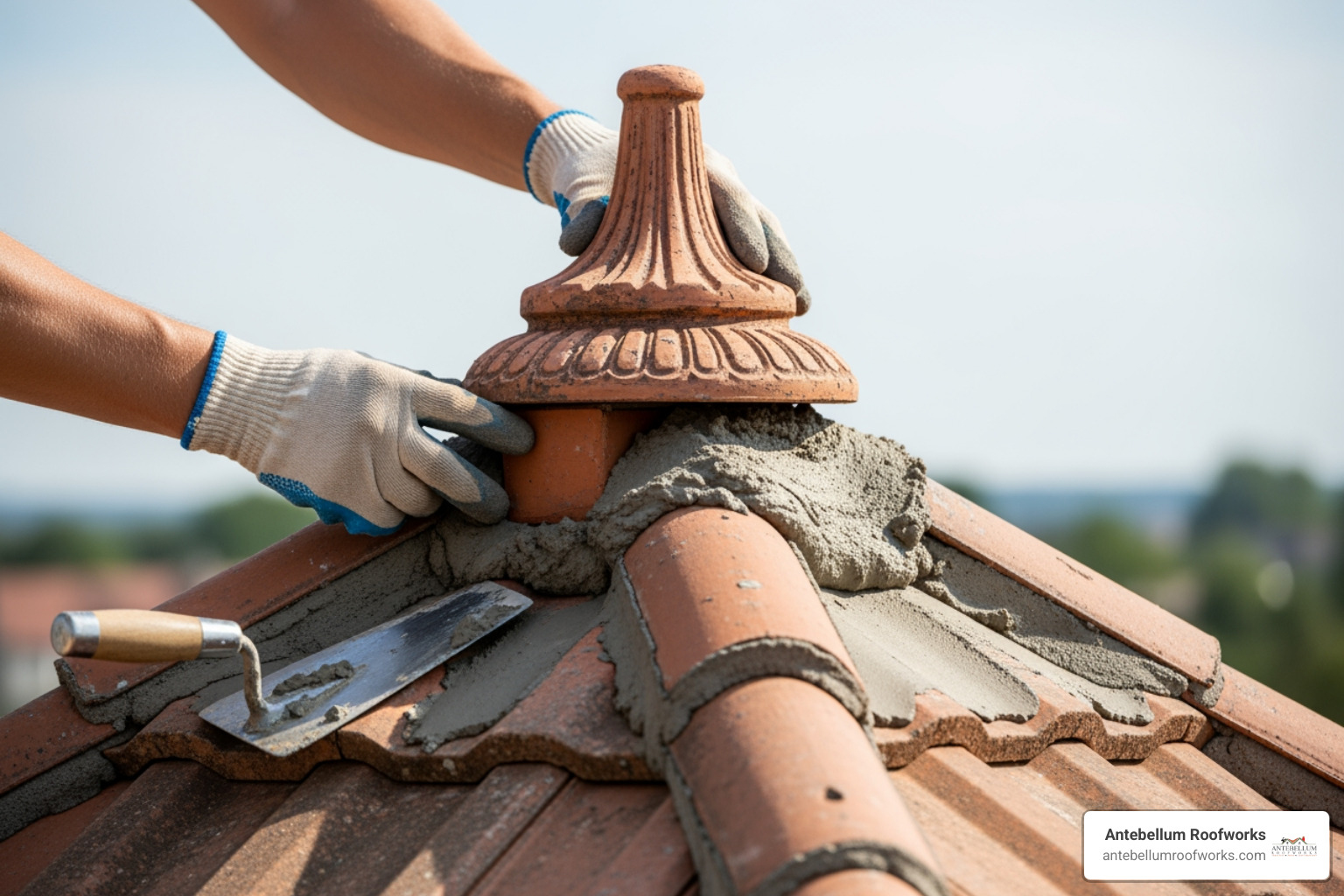
- Mortar Bedding: For specific types of finials, such as decorative terracotta gargoyles, installation can involve mortar bedding. This is the same procedure used for installing ridge tiles. The finial is set into a bed of mortar, ensuring it’s complementary to the roof’s architecture and securely held in place. This method is often seen on more traditional or ornamental roof structures.
- Gluing with Shingle Glue: Some smaller or lighter finials, particularly those designed for garden buildings or lighter structures, can be fitted by gluing them onto the roof with shingle glue or a similar strong adhesive. This method is generally less robust than anchoring into solid wood and is typically recommended for non-structural or lighter decorative pieces.
- Screwing through a Base Flange: Another method involves finials with a base flange that can be screwed directly to the roof. In this case, small holes are drilled in the corners of the finial’s base, and it’s screwed to the roof. It’s crucial to seal these screw points carefully with silicone caulk to prevent any water ingress. If a finial has a pre-drilled hole for an optional decorative ball that won’t be used, we advise sealing this hole with silicone to maintain weather integrity.
Achieving a Perfect, Watertight Seal
An improper seal is the number one cause of installation failure, leading to leaks, rot, and significant roof damage. The goal is to create an impenetrable barrier against water, protecting your home’s interior from the elements. We cannot stress enough the importance of this step.
The Critical Role of Adhesive Silicone Caulking
Silicone caulk is your best friend for waterproofing. Use it liberally and strategically to ensure no water can penetrate around your finial. This is the unsung hero of a long-lasting, leak-free finial installation.
- Applying Caulk to Drilled Holes: As mentioned, before inserting any posts or screws, generously fill the pre-drilled holes with adhesive silicone caulk. This creates an initial seal within the roof’s structure.
- Sealing Around the Post Base: Once the finial post is in place, apply a thick, continuous bead of caulk around the entire base where the post meets the roof surface. This forms a critical external barrier against water.
- Covering Screw Heads: If you’re using screws to secure a roof mount or finial base, apply a dab of caulk over each screw head after it’s tightened. This prevents water from seeping through the screw shaft.
- Sealing Inside Roof Caps: If a roof cap is part of your installation, apply caulk inside the cap, especially around any openings or bushings where the finial post passes through. Roof caps are ornamental only and do not provide a structural or waterproof seal on their own.
- Cleaning Excess Caulk with Paint Thinner: Don’t worry about being too tidy during application; the priority is a complete seal. Any wet silicone can be easily cleaned up with a cloth rag dampened with paint thinner, leaving a neat finish.
Installing with Roof Caps and Flashing
It’s a common misconception that roof caps provide a waterproof seal. We want to clarify: ROOF CAPS ARE USED FOR ORNAMENTAL PURPOSES ONLY and NOT for supporting a finial or weathervane or sealing a roof from weather. The integrity of your roof depends on proper sealing and flashing beneath the cap.
- Ornamental Roof Caps: These caps are designed to improve the aesthetic appeal of your roofline, often complementing the finial. They should be installed carefully to avoid catching edges or damaging existing roofing materials.
- Sealing Roof Before Cap: The roof must be properly sealed with roofing materials and flashing before the roof cap is installed. This means ensuring your underlying roofing system (whether it’s shingles, tiles, or metal roofing) is watertight at the peak.
- Integrating with Flashing: When installing a finial, we ensure it integrates seamlessly with existing or new flashing. This might involve custom sheet metal work to create a secure, multi-layered barrier against water penetration, especially critical for the varied weather conditions in places like Franklin, TN. After the finial is installed and sealed, the ornamental roof cap can be carefully pushed firmly onto the roof peak and secured, often with copper-coated stainless steel screws.
Frequently Asked Questions about Roof Finials
Here are answers to some common questions about selecting and installing roof finials, drawing from our experience in Middle Tennessee.
How do I choose the right size finial for my roof?
Determining the correct size finial involves both aesthetic proportionality and practical considerations. A general rule is that the finial’s bottom-most ornament should sit about 1 to 2 inches above the roof peak or roof cap’s peak. Beyond that, the size should be in proportion to the roofline, the scale of the building, and the overall architectural style. For a small shed or garage, a 12-inch “mini” finial might be perfect. For a large residential home, a 24-inch or 36-inch finial would be more appropriate, and for grander structures, a 48-inch finial might be necessary to make a statement. Consider the visual impact from the ground; a finial that looks large up close might appear too small from a distance if the building is tall.
Can a finial also function as a lightning rod?
While some finials can be incorporated into a lightning protection system, a standard decorative finial is not a lightning rod. A proper lightning protection system requires specific materials, solid conductor rods, and a direct path to the ground, which must be installed by a certified professional. If you require lightning protection for your property, we can certainly discuss incorporating it into a custom finial design, but it will involve more than just the finial itself. It’s a specialized request that needs careful planning.
What are common mistakes to avoid during installation?
Avoiding common mistakes can save you significant time, money, and headaches. We’ve seen them all, and here are the most frequent pitfalls during roof finial installation:
- Failing to anchor into solid wood: This is perhaps the most critical error. If the finial isn’t securely anchored into a solid structural element (like a rafter or ridge beam), it can loosen, lean, or even fall off, leading to roof damage and potential injury.
- Using insufficient or incorrect sealant: Not using enough high-quality adhesive silicone caulk, or using the wrong type of sealant, is a recipe for leaks. Water will find any tiny opening, leading to rot, mold, and costly interior damage. Always ensure a generous and continuous bead of caulk.
- Installing the finial crooked (not plumb): A finial that isn’t perfectly straight detracts significantly from your home’s appearance. Always use a level to ensure it’s plumb from all angles.
- Ignoring safety precautions: Working at heights without proper ladder safety, PPE, or a safety harness is incredibly dangerous and can lead to serious injury or worse.
- Underestimating material compatibility: Using materials that don’t withstand local weather conditions or react poorly with existing roofing can lead to premature failure or staining.
- Assuming roof caps provide waterproofing: Roof caps are ornamental. The waterproofing must be done before the cap is installed.
If you encounter any of these issues or cause damage during a DIY attempt, a professional roof repair may be necessary to correct the problem and prevent further complications.
Your Home’s Crowning Achievement
A beautifully installed finial adds a touch of elegance and distinction to your property in Franklin, TN, and throughout Middle Tennessee. By following these steps—prioritizing safety, using the right materials, and ensuring a watertight seal—you can securely attach this finishing touch to your home. We’ve outlined the various methods and crucial considerations for a successful roof finial installation, from selecting the right material to securing the perfect seal.
However, for complex rooflines, custom pieces, historical restorations, or if you simply prefer the peace of mind that comes with professional expertise, the craftsmen at Antebellum Roofworks have the experience to ensure your architectural elements are installed with precision and care. We understand the nuances of working with different materials, from copper roofing to custom sheet metal, and we pride ourselves on delivering lasting quality.
If you’re considering adding a unique architectural feature to your home, explore our custom spires and finials or call us at (615) 794-9111 to discuss your project. We’re here to help you crown your home with distinction.