
Why Barn Cupolas Remain Essential for Modern Properties
A barn cupola is more than decorative—it is a proven ventilation tool that protects structures, livestock, and stored crops while adding classic Americana style. Property owners who want long-lasting, weather-tight roofs increasingly pair cupolas with professional roofing services in Middle Tennessee to improve both performance and curb appeal in a single project.
Quick Overview: Barn Cupola Essentials
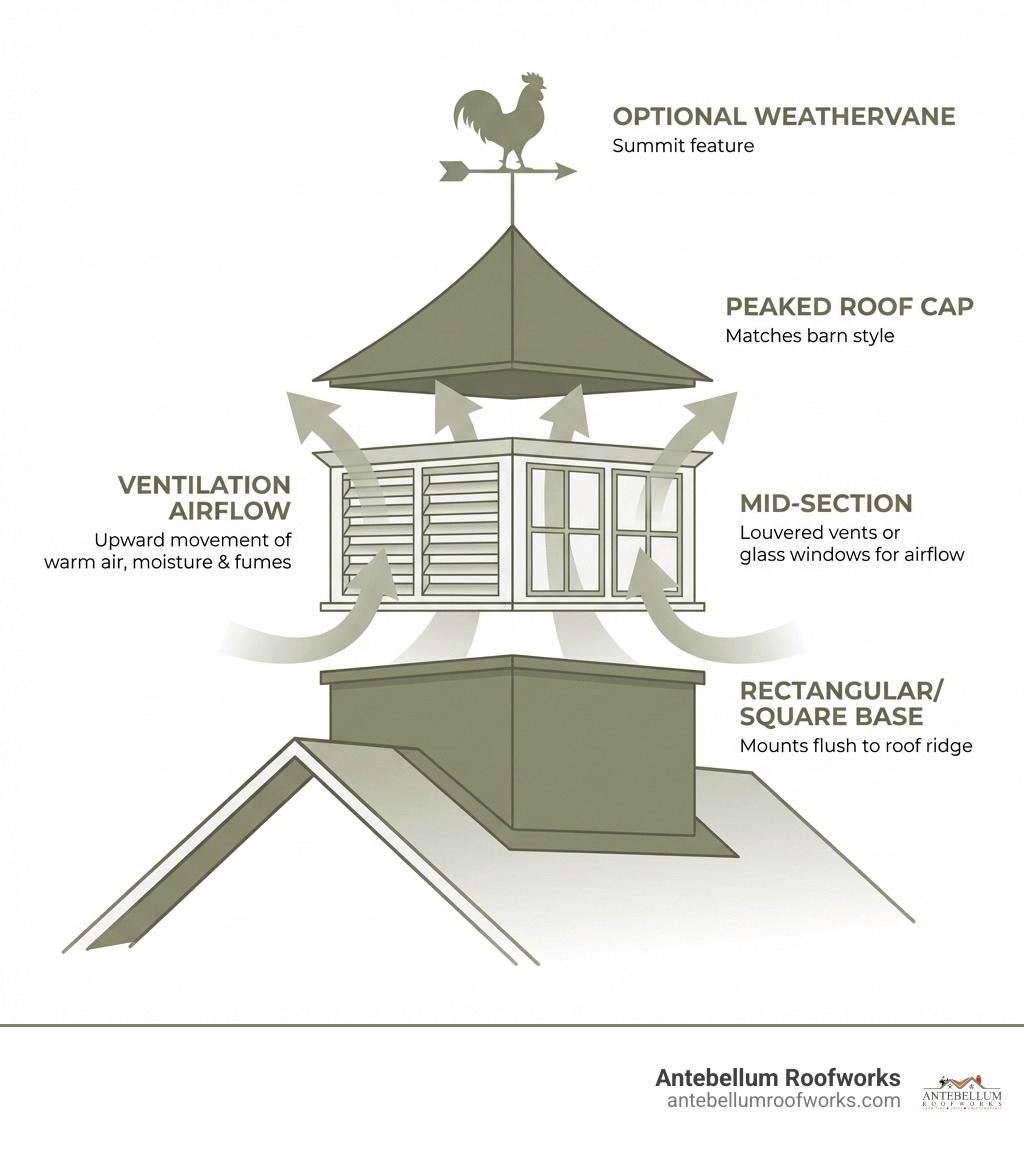
- Definition: A small, tower-like structure mounted on a barn’s roof ridge, typically featuring vents or windows
- Primary Function: Provides passive ventilation to remove heat, moisture, and harmful fumes
- Secondary Benefits: Adds natural light, improves curb appeal, and increases property value
- Typical Size: 1–1.5 inches of cupola base per foot of roof ridgeline
- Cost Range: About $1,500–$3,000 for standard prefabricated models, plus installation
- Materials: Wood, vinyl/PVC, copper, or galvanized steel
Whether you own a historic barn in Franklin, TN, or you’re building a new agricultural structure, a cupola offers year-round benefits. During humid summers, it exhausts trapped heat and moisture that can damage stored crops or harm livestock. In winter, it ventilates without creating excessive drafts.
From Ancient Domes to Farmstead Icons: The History of the Cupola
The journey of the cupola stretches from opulent ancient structures to the iconic American barn. Understanding this rich history explains why cupolas still appear on everything from courthouses to farmsteads across Middle Tennessee.

Ancient Origins
Cupolas trace their lineage back to at least the 8th century in Islamic architecture, where small, lifted structures served as lookouts, lanterns, and symbolic markers. Many architectural historians view these early rooftop lanterns as direct precursors to true domes and lantern towers. For deeper context, see the entry on cupolas in architectural history.
European Renaissance
During the Renaissance, cupolas found their way into European design. They were adopted for their architectural significance and visual drama, often crowning churches, palaces, and public buildings. Cities like Florence and Rome used elaborate cupolas to mark their skylines.
American Evolution
The cupola’s transition to America led to a shift from pure prestige to practical performance. During the post-Civil War agricultural boom, as barns grew larger, farmers found that simple roof openings couldn’t adequately manage heat and moisture.
This is where the barn cupola truly came into its own. It provided a dedicated, structured outlet for rising hot, humid air, becoming indispensable on countless farmsteads. Today, the classic American barn with its prominent cupola is an enduring rural icon.
The Functional Heart of the Barn: More Than Just a Pretty Peak
While a barn cupola adds charm and character, its primary role has always been deeply rooted in functionality. For property owners in Franklin, TN, and throughout Middle Tennessee, these structures offer tangible benefits extending far beyond aesthetics.
Ventilation: The Breath of the Barn
At its core, a cupola is an ingenious passive ventilation system. Barns accumulate heat, moisture, and harmful fumes like ammonia. A cupola, placed at the roof’s peak, acts like a chimney, allowing warm, damp air to escape. This continuous airflow is crucial for:
- Crop Preservation: Prevents humidity buildup that leads to mold, mildew, and rot in stored hay, grain, or tobacco. Agricultural studies show that even a 5% moisture increase in stored hay dramatically raises spoilage risk.
- Livestock Health: Removes toxic gases, reducing respiratory issues and stress in cattle, horses, and other animals.
Natural Light and Modern Relevance
Many cupolas feature glass panels or windows, allowing natural light to illuminate the barn’s interior. This reduces reliance on artificial lighting and makes interiors safer to work in.
Modern barns often include mechanical ventilation or ridge vents, but functional cupolas remain valuable, low-maintenance components that work even during power outages. In hobby barns, equestrian facilities, and barndominiums, cupolas frequently serve as passive ventilation backups.
Aesthetic Value: The Crown Jewel
The aesthetic contribution of a barn cupola is significant. It transforms a plain roofline into a recognizable silhouette, adding character and classic Americana charm. Many owners top their cupolas with traditional weathervanes, turning functional features into memorable architectural centerpieces.
Designing the Perfect Barn Cupola for Your Property
Designing a barn cupola is about proportion, performance, and style working together. When Middle Tennessee property owners consult a roofing professional early—ideally the same team handling their main roof—they avoid common sizing and placement mistakes and end up with a feature that looks intentional instead of like an afterthought.
Sizing Guidelines: The Art of Proportion
Getting the size right is critical. A cupola that’s too small looks lost, while one that’s too large can be overwhelming. The industry rule of thumb is simple and effective:
Use 1 to 1.5 inches of cupola base for every foot of uninterrupted roof ridgeline.
- For a 24-foot ridgeline: A 24-inch to 36-inch base is appropriate.
- For a 40-foot barn: A cupola with a 40-inch to 60-inch base is ideal.
- For larger barns (60+ feet): Consider using multiple, smaller cupolas for a balanced look.
This rule keeps cupolas visually anchored to the barn’s mass while still delivering ample ventilation. Project Sales Consultants who regularly work with agricultural buildings are especially helpful for barns with unusual rooflines or mixed uses.
Style & Customization: Making It Yours
Once you’ve determined the size, you can focus on style. This is where you can add a personal touch that complements your property’s character.
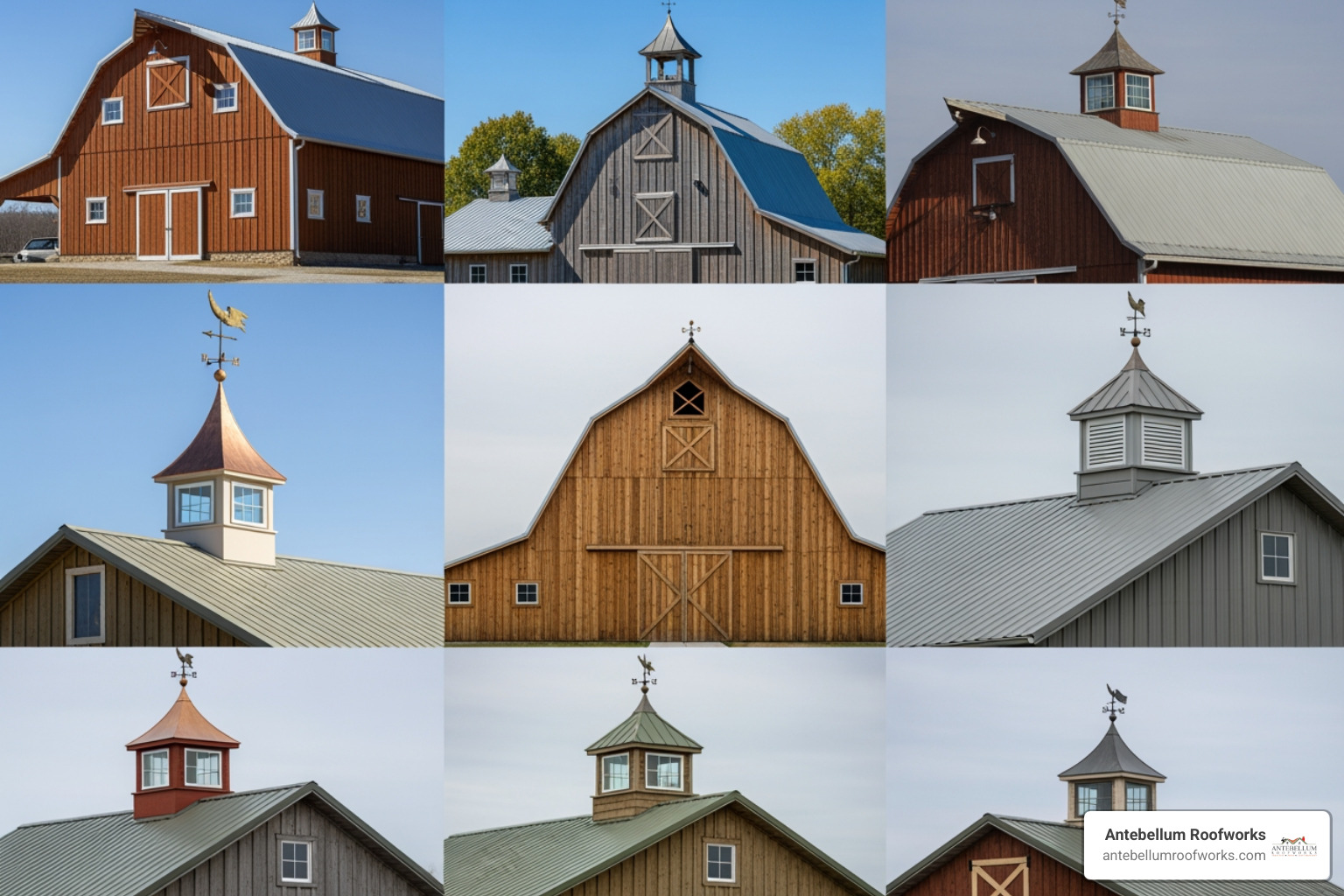
- Louvered vs. Windowed: Louvered cupolas are the classic choice for maximum ventilation, while windowed cupolas are excellent for introducing natural light. Some designs even offer a combination of both.
- Roof Shapes & Weathervanes: Cupola roofs can be designed to match or complement your barn’s existing roofline. Topping it with a decorative weathervane is the ultimate finishing touch. From classic farm animals to custom motifs, a weathervane adds personality and a nod to traditional craftsmanship.
Thoughtfully chosen details—such as matching the cupola roof pitch to the main roof or repeating trim colors—help the entire structure read as one cohesive design rather than a collection of unrelated parts.
Material Matters for Your Barn Cupola
Choosing the right material for your barn cupola is crucial for its longevity, maintenance, and overall aesthetic appeal. Given Middle Tennessee’s diverse weather patterns, selecting a durable, weather-resistant material is a decision you won’t regret.
Material Comparison: Wood, Vinyl/PVC, and Metal
Here’s a comparison of the most common materials used for cupolas, outlining their pros and cons:
| Feature | Wood Cupolas | Vinyl/PVC Cupolas | Metal (Copper/Steel) Cupolas |
|---|---|---|---|
| Pros | – Classic, traditional aesthetic – Can be painted or stained to match any barn – Natural, rustic charm |
– Low-maintenance: Durable and resistant to rot, insects, and moisture – Versatile: Can be painted and comes in various colors and styles – Cost-effective compared to copper |
– Durability: Copper and galvanized steel are exceptionally long-lasting and weather-resistant – Aesthetic appeal: Copper develops a natural patina over time; steel can be painted any color – Low maintenance once properly installed |
| Cons | – Higher maintenance: Requires periodic painting or staining to prevent rot and decay – Vulnerable to pests: Susceptible to termites and other wood-boring insects – Can be more expensive for premium woods like cedar |
– Aesthetics: Does not replicate the grain and texture of real wood – Can become brittle over very long periods of intense UV exposure |
– Cost: Copper is a premium, higher-priced material – Installation: Heavier and may require more specialized installation techniques |
Expert Craftsmanship in Custom Metal
While wood and vinyl are popular, custom sheet metal offers excellent durability and design flexibility. Materials like copper and galvanized steel are ideal for the Tennessee climate because they resist corrosion and thermal movement when properly detailed. Copper ages gracefully, developing a classic green patina, while painted galvanized steel provides robust, low-maintenance protection.
At Antebellum Roofworks, we specialize in custom cupolas, allowing us to create a unique feature that is carefully integrated into the roof system and sealed for long-lasting performance. Precision flashing, correct fasteners, and proper anchoring are just as important for a cupola as they are for any other roof penetration, and professional metalwork dramatically reduces the long‑term risk of leaks.
Introduction
A barn cupola is more than decorative—it is a functional architectural element that has crowned barns for centuries and still plays an important role in modern construction. Property owners who want to improve ventilation, extend roof life, and boost curb appeal often rely on trusted Middle Tennessee roofing experts to integrate a cupola into a complete roofing system rather than treating it as a stand‑alone accent. This big‑picture approach helps ensure that beauty and performance move in lockstep.
Quick Overview: Barn Cupola Essentials
- Definition: A small, tower-like structure mounted on a barn’s roof ridge, typically featuring vents or windows
- Primary Function: Provides passive ventilation to remove heat, moisture, and harmful fumes
- Secondary Benefits: Adds natural light, improves curb appeal, and can increase property value
- Typical Size: 1–1.5 inches of cupola base per foot of roof ridgeline (for example, 36–48 inches for many midsize barns)
- Cost Range: Roughly $1,500–$3,000 for standard prefabricated models, plus installation
- Materials: Wood, vinyl/PVC, copper, or galvanized steel
Whether you own a historic barn in Franklin, TN, or you’re building a new agricultural structure, understanding cupolas helps you make informed decisions about your property. These timeless features originated in early Islamic architecture and later appeared across Europe before evolving into practical farmstead necessities throughout rural America.
For Middle Tennessee property owners, cupolas offer year-round benefits. During humid summers, they exhaust trapped heat and moisture that can damage stored crops or harm livestock. In winter, they ventilate without creating excessive drafts. While modern barns often include professional roofing solutions like ridge vents and mechanical fans, functional cupolas remain valuable supplements—especially in equestrian facilities and agricultural buildings where air quality directly impacts animal health.
Beyond ventilation, cupolas serve as architectural focal points. A well-proportioned cupola transforms a plain roofline into a statement piece, often topped with decorative weathervanes featuring horses, roosters, or custom designs. This combination of beauty and utility explains why barn cupolas have endured for generations.
Ready to explore whether a cupola suits your property? The following sections reveal the complete history, functional benefits, design considerations, and installation insights you need to make the right choice for your barn or agricultural building.
From Ancient Domes to Farmstead Icons: The History of the Cupola
The journey of the cupola is a fascinating architectural tale, stretching from opulent ancient structures to the humble, yet iconic, American barn. Understanding this rich history helps us appreciate why these structures continue to grace our skylines, particularly on properties across Middle Tennessee.
Ancient Origins
Cupolas can be traced back to at least the 8th century, with origins in Islamic and Mediterranean traditions. Early cupola-like structures served as rooftop lanterns, lookout points, and symbolic architectural markers. Many scholars treat them as stepping stones in the development of true domes and lantern towers that defined important religious and civic buildings; see the overview at Cupola – architectural feature for additional context.
European Renaissance
As architectural ideas spread and evolved, cupolas found their way into European design, particularly during the Renaissance. They were celebrated for their architectural significance and beauty, often crowning churches, palaces, and public buildings. These Renaissance cupolas added a sense of grandeur and sophistication, contributing to the distinctive skylines of cities like Florence and Rome. Their intricate designs and elaborate craftsmanship showcased the pinnacle of artistic and engineering skill for their time.
American Evolution
The cupola’s transition to America saw a shift from pure prestige to profound practicality. Cupolas appeared on courthouses, schools, and churches, but they became especially important on barns.
During the post-Civil War agricultural boom, as farming practices became more sophisticated and barns grew larger, the need for efficient ventilation became paramount. Farmers found that a simple opening in the roof wasn’t enough to manage the internal climate of their expanded storage and livestock facilities.
This is where the barn cupola truly came into its own. It provided a dedicated, structured outlet for air, becoming an indispensable feature on countless farmsteads. The change from a decorative, high-art architectural element to a workhorse of agricultural utility highlights the ingenuity of early American builders. Today, the classic American barn with its prominent cupola is an enduring image, a testament to this historical journey and practical evolution.
The Functional Heart of the Barn: More Than Just a Pretty Peak
While a barn cupola undeniably adds charm and character, its primary role has always been deeply rooted in functionality. For property owners in Franklin, TN, and throughout Middle Tennessee, these structures offer tangible benefits that extend far beyond aesthetics. They are, in essence, the lungs of the barn.
Ventilation: The Breath of the Barn
At its core, a cupola is an ingenious ventilation system. Barns, especially those used for crop storage, are prone to accumulating heat and moisture. This creates a breeding ground for mold, mildew, and rot, which can quickly ruin an entire harvest. Cupolas provide crucial ventilation for crop preservation by allowing warm, humid air to escape.
Hot, moist air naturally rises. A cupola, strategically placed at the highest point of the roof, acts as a chimney. It draws this warm, damp air upwards and expels it, creating a continuous flow of air through soffit inlets or side wall openings. This passive ventilation helps maintain more stable internal temperature and humidity levels, which is vital for keeping crops like hay and grain in good condition.
Livestock Health: A Breath of Fresh Air for Animals
For barns housing livestock, proper ventilation is not just about comfort—it is a matter of health and safety. Farm animals produce significant amounts of waste, which, in an enclosed space, generates toxic fumes, most notably ammonia. Liftd ammonia concentrations are closely linked to respiratory problems and increased stress in confined animals.
Cupolas are highly effective at removing these harmful gases, ensuring a healthier environment for cattle, horses, chickens, and other animals. They provide ventilation without letting in excessive cold air, which is particularly beneficial during colder seasons when barns might otherwise be sealed up. This allows for continuous air exchange, mitigating the risks associated with poor air quality.
Natural Light: Illuminating the Interior
Many cupolas offer the added benefit of natural light. Cupolas with glass panels or windows allow sunlight to filter into the barn’s interior. This not only makes the space brighter and more pleasant to work in but can also reduce the need for artificial lighting during the day.
Modern Relevance: Blending Tradition with Technology
Modern barns frequently integrate mechanical ventilation or ridge vents, but the functional barn cupola remains far from obsolete. In agricultural and equestrian settings—especially hobby pole barns, equestrian pole barns, and barndominium homes—cupolas continue to serve as reliable passive systems. They supplement fans, improving air turnover rates, and they keep working during power outages when mechanical systems are offline.
The key is that they contribute to a healthier interior environment by facilitating continuous, low‑energy airflow, which is beneficial regardless of what other systems are in place.
Aesthetic Value: The Crown Jewel of Your Property
Function sits at the center of cupola design, but aesthetics are an important bonus. Today, a cupola is as much about curb appeal as it is about performance, often serving as the architectural focal point of a barn or even a large garage or workshop. It transforms a plain roofline into something special, adding character, charm, and a touch of classic Americana that many property owners seek when they picture a traditional barn.
Designing the Perfect Barn Cupola for Your Property
Designing a barn cupola requires balancing proportion, performance, and style. When Middle Tennessee property owners consult roofing professionals early, they avoid common sizing mistakes and achieve features that look intentional.
Sizing Guidelines: The Art of Proportion
Getting the size right is critical. The industry rule of thumb is simple:
Use 1 to 1.5 inches of cupola base for every foot of uninterrupted roof ridgeline.
- 24-foot ridgeline: 24-inch to 36-inch base
- 40-foot barn: 40-inch to 60-inch base
- 60+ foot barns: Consider multiple smaller cupolas
This rule keeps cupolas visually anchored while delivering ample ventilation.
Style & Customization
Once sized, focus on style:
- Louvered vs. Windowed: Louvered cupolas maximize ventilation; windowed cupolas introduce natural light
- Roof Shapes & Weathervanes: Match your barn’s roofline and add personality with decorative weathervanes
Material Comparison
| Feature | Wood | Vinyl/PVC | Metal (Copper/Steel) |
|---|---|---|---|
| Pros | Classic aesthetic, paintable | Low-maintenance, affordable | Extremely durable, weather-resistant |
| Cons | Requires regular maintenance | Lacks wood grain texture | Higher initial cost |
Expert Craftsmanship
Custom sheet metal offers exceptional durability for Tennessee’s climate. At Antebellum Roofworks, we specialize in custom cupolas with precision flashing and proper anchoring.
How Many Cupolas?
- Single Statement Piece: Ideal for most barns
- Multiple Cupolas: Recommended for 70+ foot ridgelines
- Weathervane Options: Traditional horses, roosters, or custom motifs add personality
Budgeting and Installation: Bringing Your Cupola Vision to Life
Adding a barn cupola is an investment in both your property’s function and its curb appeal. For property owners in Franklin, TN, and the surrounding Middle Tennessee area, understanding the costs and installation process is key to planning a successful project.
Budgeting for Your Cupola
The cost of a cupola varies based on size, material, and design complexity. Standard prefabricated models in the 36″–48″ range typically cost $1,500 to $3,000, with installation as a separate line item. Customizations will influence the final price:
- Glass Panels: Adding windows to increase natural light can add up to $1,200 to the cost, depending on glazing type and frame material.
- Material Choices: Premium materials like copper or custom-fabricated steel sit at the higher end of the price spectrum compared to vinyl or standard wood.
- Decorative Elements: Custom weathervanes, detailed louvers, or unique roof shapes can also increase the total investment.
When budgeting, it is wise to account for associated roofing work—such as new flashing, decking repairs, or ridge modifications—so that the entire assembly performs as one continuous system.
The Importance of Professional Installation
While a DIY approach might seem tempting, professional installation is crucial for a barn cupola’s longevity and performance. An improperly installed cupola can lead to roof leaks, uplift failures in high winds, and structural issues.
Professional installation matters because:
- Safety & Precision: Roofing professionals have the equipment and experience to work safely at height and ensure the cupola’s base is cut or fabricated to match the exact pitch of your roof for a tight, watertight fit.
- Structural Integrity: A cupola must be securely anchored to framing members or trusses to withstand Middle Tennessee’s storms. Proper fasteners, blocking, and bracing help prevent movement or damage during high winds.
- Weatherproof Detailing: Correct underlayment, flashing, and sealant placement around the cupola are critical to prevent moisture intrusion. These details are similar in importance to chimney or skylight flashing.
- Warranty Protection: Many manufacturer and installation warranties are valid only when the work is performed by a certified contractor.
At Antebellum Roofworks, our team is experienced in handling these intricate installations, ensuring your cupola is structurally sound, leak-free, and visually aligned with the rest of the roof for years to come.
Frequently Asked Questions about Barn Cupolas
Here are answers to some of the most common questions property owners in Franklin, TN, and across Middle Tennessee ask about barn cupolas.
What is the main purpose of a barn cupola?
A: The main purpose of a barn cupola is to provide essential passive ventilation by exhausting heat and moisture from the interior of the barn. This protects stored crops from mold and rot and reduces harmful gases like ammonia from livestock areas. A well‑sized cupola functions like a chimney, continuously venting warm, stale air without the need for moving parts or electricity.
Beyond this vital function, a cupola significantly improves the building’s architectural appeal, turning a basic structure into a recognizable focal point on the property.
How do I choose the right size for my barn cupola?
A: Choosing the correct size is crucial for both aesthetic balance and effective airflow. The standard guideline is 1 to 1.5 inches of cupola base for every foot of uninterrupted roof ridgeline.
For example:
- A 40-foot long roof ridgeline typically calls for a cupola with a base between 40 inches (40″ x 40″) and 60 inches (60″ x 60″).
- A 60-foot ridgeline usually suits a base between 60 inches and 90 inches, whether in one large cupola or multiple smaller units.
This guideline keeps the cupola proportionate to the barn and ensures enough vent area to be meaningful. Because barns are larger in scale than houses, barn cupolas are usually substantially bigger than residential models.
Are cupolas on modern barns purely decorative?
A: No. While many modern cupolas are chosen for their decorative value, they are not purely decorative in working barns. In agricultural and equestrian facilities, functional cupolas are still widely used to supplement ridge vents and mechanical fans. They help maintain healthy indoor environments by allowing hot, stale, and humid air to escape continuously, protecting crops and supporting livestock health. Their visual charm is real, but their practical value remains a primary reason they are still installed today.
Lift Your Property with an Expertly Crafted Cupola
Recap: A Timeless Addition
A barn cupola is a rare architectural feature that blends centuries of history with everyday practicality. When properly sized and professionally installed, it improves ventilation, protects valuable contents, and lifts the appearance of almost any barn or agricultural building.
Your Middle Tennessee Cupola Experts
For homeowners and property managers in Franklin, TN, and the surrounding Middle Tennessee area, partnering with a local specialist is the most reliable way to get a cupola that looks right and performs well over time. At Antebellum Roofworks, we handle everything from structural assessment and design recommendations to precise installation and flashing. Our experience with custom cupolas and complex roof details means your project will be custom to your building and our region’s climate.
You can learn more about our craftsmanship and safety‑first approach on our About Us page.
Ready to Transform Your Barn?
If your barn struggles with heat, moisture, or a dated roofline, a thoughtfully designed cupola can be a compact but powerful upgrade. Our team is ready to help you plan a solution that integrates seamlessly with your existing roofing system.
To discuss design options, materials, and installation timelines, contact us today or call (615) 794-9111 to schedule a personalized consultation and bring your cupola vision to life.