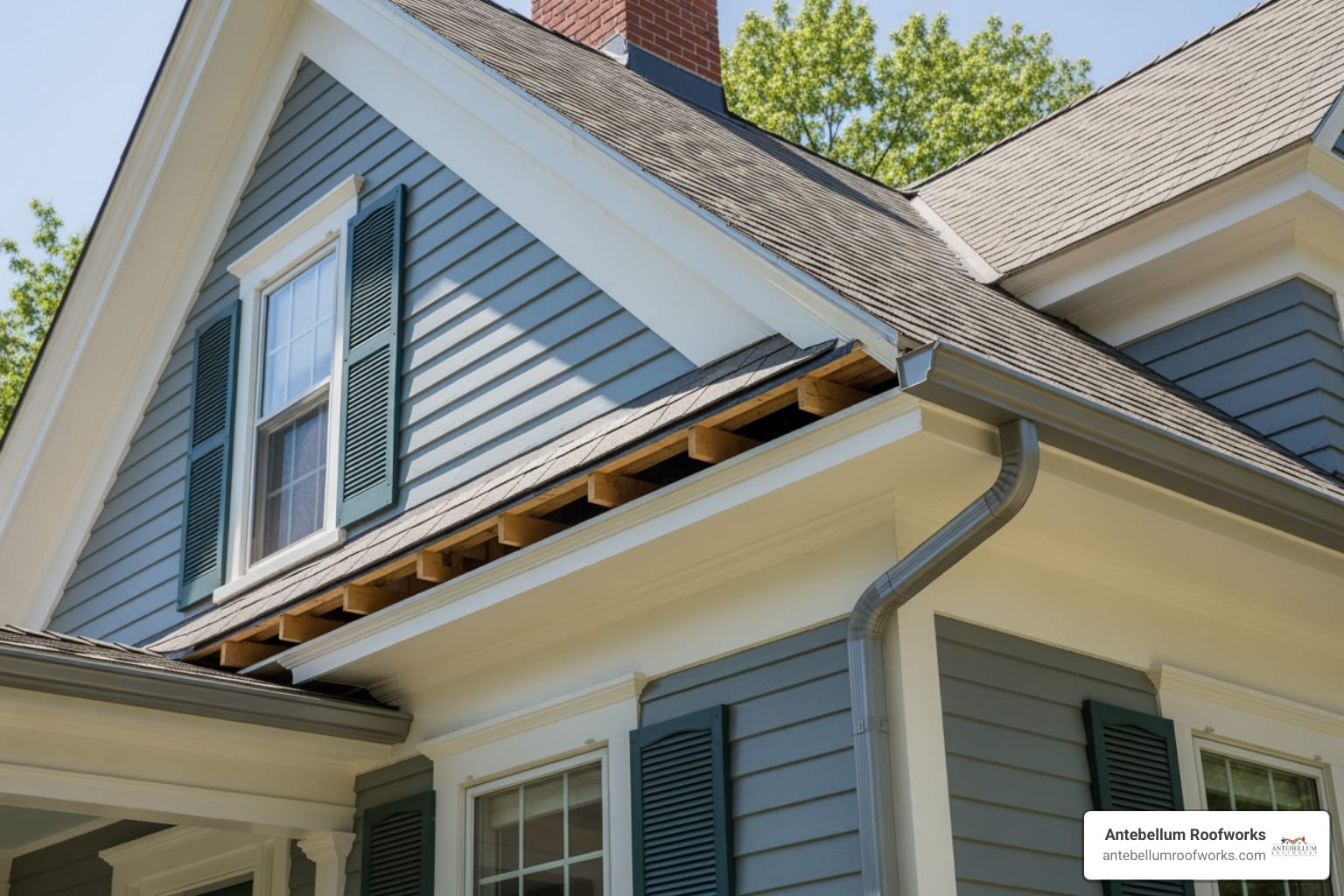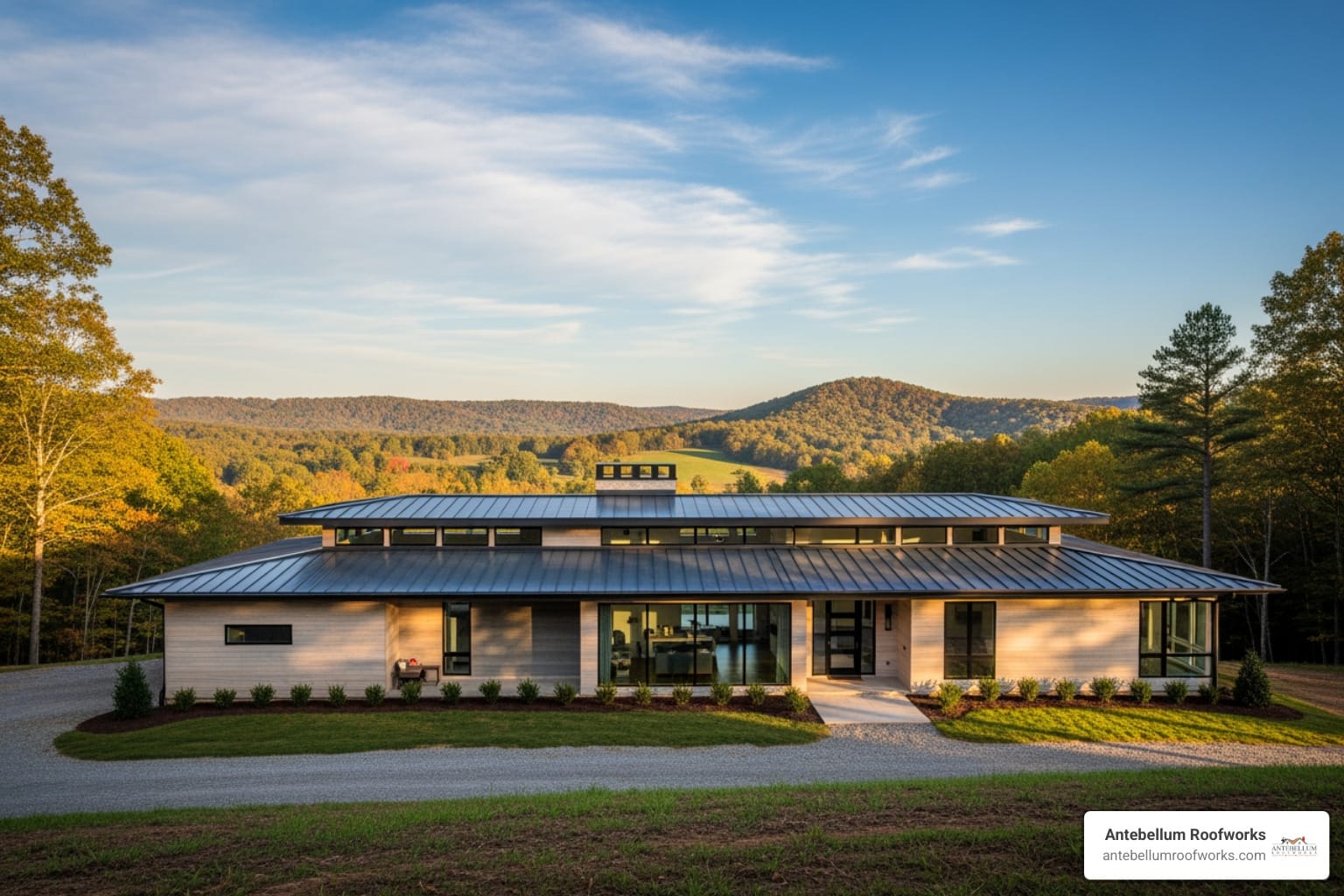

Why Decorative Roof Ridge Elements Matter for Your Home
A decorative roof ridge is an ornamental element installed along the peak of a roof to improve its architectural character and visual appeal. These features—primarily ridge cresting and finials—transform an ordinary roofline into a distinctive architectural statement. For homeowners seeking to lift their property’s aesthetic, understanding these elements is key to achieving a truly custom look, a process our team specializes in as part of our comprehensive roofing solutions.
Quick Answer: What You Need to Know About Decorative Roof Ridges
- Ridge Cresting: Linear, repetitive ornamental patterns that run along the entire length of your roof’s peak
- Finials: Vertical decorative elements placed at roof apexes, gables, or the ends of ridge lines
- Common Materials: Clay/terracotta, copper, cast iron, steel, aluminum, and wood
- Primary Benefits: Improved curb appeal, increased property value, improved ventilation, and historical authenticity
- Cost Range: From a few hundred dollars for simple clay elements to several thousand for custom copper or cast iron designs
- Installation: Requires professional roofing expertise to ensure proper mechanical fixing and weatherproofing
For centuries, homeowners have used these elements to distinguish their properties from neighboring structures. The tradition dates back to Greek, Roman, and Asian architecture, but it was the Victorian era of the 1800s that truly popularized the decorative roof ridge as a sign of craftsmanship and prosperity. What began as a practical solution to protect vulnerable ridge seams from rainwater evolved into an art form that continues to define architectural character today.
In Middle Tennessee, where historic homes stand alongside modern construction, these decorative elements offer homeowners a unique opportunity to add personality and distinction to their properties. Whether you’re considering a roof replacement or simply want to improve your home’s curb appeal, understanding your options for decorative roof ridge elements is the first step toward creating a truly memorable roofline.
The good news? Adding these features is more accessible than most homeowners realize, and the impact on your home’s appearance can be dramatic. If you’re interested in exploring how a decorative roof ridge could transform your property, the experts at Antebellum Roofworks are ready to guide you through the selection and installation process. Call (615) 794-9111 to discuss your vision.

The Crowning Glory: What Are Decorative Roof Ridge Elements?
A decorative roof ridge is an ornamental element installed along the peak (ridge) of a roof to improve its architectural character. These features are not mutually exclusive and can be used together to create a layered, sophisticated look. The two primary categories are ridge cresting and finials, each serving a distinct aesthetic purpose.
Ridge Cresting
Ridge cresting, also sometimes referred to as ridge roll, consists of linear, repetitive patterns that run along the entire length of a roof’s peak. These elements emphasize the linearity of a structure, drawing the eye along the roofline. They come in various designs, from simple geometric shapes to intricate, repeating motifs. Historically, ridge cresting has been used to create a visually appealing finish while also protecting the vulnerable ridge seam.

Finials
Finials are distinct, vertical decorative elements typically placed at the apex of a roof, on gables, or at the ends of ridge lines. Unlike cresting, which emphasizes length, finials draw the eye upward, acting as a focal point and adding a sense of verticality and elegance to the roof. From intricate Spires to stately Cupolas, finials offer a striking way to cap off a roof design. They were traditionally fitted to most gables to improve and provide originality to the roof, often extending the lines of the roof with a vertical and neat projection.
From Status Symbol to Style Statement: A Brief History
The practice of adorning a roof’s peak is not a modern invention. Its roots can be traced to ancient Greek, Roman, and Asian architecture, where such embellishments often carried symbolic meaning or denoted status. However, it was the Victorian era that truly popularized the decorative roof ridge. During the 1800s, intricate iron cresting and finials became a hallmark of Victorian design, serving as a visible symbol of wealth and fine craftsmanship. Indeed, it has been a British tradition since the 1800s to adorn roofs with roof finials and detail.
Finials, in particular, quickly became prominent roof decoration elements. They were originally designed to protect the framework from rainwater infiltration, making them not just beautiful but also functional. Over time, while modern roofing techniques have made this protective function less critical, the aesthetic tradition endures. This rich history makes these details essential for authentic Historical Roof Restoration projects, particularly on the beautiful period homes we see across Franklin, TN, and Middle Tennessee. The Victorians, known for their elaborate architectural tastes, used a variety of finial spire styles including, but not limited to, the sphere, the spike, the fleur-de-lys, and the crown, showcasing the diverse artistic expressions of the era.
Choosing Your Style: A Guide to Decorative Roof Ridge Designs and Materials
Selecting the right decorative element requires balancing material, style, and your home’s architectural identity. The vast array of options allows for a high degree of customization, ensuring a perfect match for any project.
Common Materials for Your Decorative Roof Ridge
The material is the foundation of both the look and longevity of your roof decoration. Each offers a unique set of benefits.
| Material | Aesthetic | Durability | Maintenance | Typical Cost (Relative) |
|---|---|---|---|---|
| Clay/Terracotta | Traditional, earthy, warm, natural | Excellent, weather-resistant, colorfast | Low, occasional cleaning | Medium |
| Copper | Neat, develops rich patina, distinctive | Exceptional, corrosion-resistant, long-lasting | Very low, self-cleaning (patina) | High |
| Cast Iron/Steel | Robust, ornate, industrial, classic | Good, strong, heavy | Moderate to High (prone to rust if not protected) | Medium to High |
| Aluminum | Lightweight, versatile, modern, various finishes | Good, corrosion-resistant, lightweight | Low, easy to clean | Medium |
| Wood | Natural, rustic, customizable | Varies (prone to rot, insects, weather damage) | High (requires regular sealing, painting) | Low to Medium |
- Clay/Terracotta: Often handmade, clay and terracotta elements offer a timeless, natural look. They are incredibly durable and weather-resistant, making them a popular choice for traditional homes. Clay is a natural material, and products are subject to dimensional tolerances, meaning each piece can have a unique character. These are excellent for achieving a period feature feel.
- Copper: Known for its elegance and longevity, Copper Roofing elements develop a beautiful greenish-blue patina over time, adding unique character to any home. Copper is exceptionally durable and corrosion-resistant, requiring very little maintenance. Its rich aesthetic makes it a sought-after material for high-end decorative features.
- Cast Iron/Steel: These robust metals allow for incredibly intricate and strong designs. Cast iron and steel decorative elements provide a classic, often Victorian-inspired, aesthetic. While durable, they typically require more maintenance than copper or clay, especially steel, to prevent rust, often needing periodic repainting or protective coatings.
- Aluminum: A lightweight and versatile option, aluminum can be molded into various shapes and finished to mimic other metals or painted in custom colors. It is corrosion-resistant and generally low maintenance, offering a good balance of aesthetic flexibility and durability.
- Wood: For a rustic or specific architectural style, wood can be a beautiful choice. However, wood finials and cresting require significant maintenance, including regular sealing or painting, to protect them from the harsh elements of Middle Tennessee’s climate, such as humidity and temperature fluctuations.
Popular Styles and Designs
The sheer variety of decorative roof ridge styles means there’s something to suit every architectural taste.
- Cresting Styles:
- Cockscomb: A classic, serrated design reminiscent of a rooster’s comb, offering a sharp, distinguished look.
- Fleur-de-lys: A timeless motif, often associated with French royalty, adding a touch of classic elegance.
- Spikes: Simple yet effective, spikes can create a strong, linear silhouette.
- Geometric Patterns: From simple arcs to more complex interwoven designs, geometric cresting provides a clean, structured aesthetic. We’ve seen starburst patterns and long, decorative ridge crests used to great effect on various structures.
- Finial Styles:
- Victorian Spire: Characterized by diverse shapes like spheres, spikes, fleur-de-lys, and crowns, these finials are perfect for restoring historical accuracy or adding period charm.
- Ball Finial: A classic, rounded design that offers a soft yet prominent focal point.
- Animal Figures: For a touch of whimsy or symbolic protection, animal finials such as dragons, gargoyles, cats, or swans are increasingly popular. Gargoyle finials, for instance, are traditionally believed to scare off evil spirits.
- Gargoyles: While some historical gargoyles had a functional purpose in rainwater drainage, modern decorative gargoyles are purely ornamental, offering an interesting and ornate feature with intricate detail.
- Tudor Finials: These easily add an ornamental feature, often based on angled ridge tiles, reproducing classic roof features.

Matching a Decorative Roof Ridge to Your Home’s Architecture
A decorative roof ridge should complement, not clash with, your home’s existing style.
- Victorian/Queen Anne: Accept the ornate! Intricate cast iron cresting, fleur-de-lys patterns, and elaborate finials (spikes, spheres, crowns) are perfectly suited. Consider a detailed dragon or a traditional Victorian-style crest to truly capture the era’s grandeur.
- Gothic Revival: Look for sharper, more angular cresting and finials that echo the verticality and dramatic lines of Gothic architecture. Perhaps a cross finial or a more pointed spire.
- Tudor: Simpler, robust cresting or specific Tudor-style finials can improve the half-timbered aesthetic.
- Modern/Contemporary: While often minimalist, even modern homes can benefit from a carefully chosen decorative ridge. Clean, geometric cresting in metals like aluminum or stainless steel, or a sleek, minimalist finial, can add a sophisticated touch without overwhelming the design. Pairing old-world design with modern construction can be gorgeous when done right.
- Elements like Chimney Caps also contribute to the overall roofline aesthetic and should be considered alongside your decorative ridge choices for a cohesive look.
More Than Just a Pretty Face: The Functional Benefits
While their primary appeal is aesthetic, decorative roof ridges offer several practical advantages that contribute to a healthier and more valuable home.
Aesthetic and Structural Advantages
Beyond their obvious beauty, these elements play a significant role in the overall presentation and integrity of your roof.
- Breaking up Roof Mass & Dynamic Silhouette: A large, unadorned roof can sometimes appear monolithic. Decorative cresting can help break up the visual mass of a roof and draw the eye upward, creating a more dynamic and engaging silhouette. Finials, with their vertical projection, further improve this effect.
- Curb Appeal & Property Value: A well-chosen decorative roof ridge instantly lifts a home’s curb appeal, making it stand out in any neighborhood. This unique architectural detail can significantly increase property value, making it a wise investment for homeowners in Franklin, TN, looking to improve their homes.
- Framework Protection: Historically, finials had a crucial function: to protect the framework of the roof from rainwater infiltration. While modern flashing and sealants handle much of this task today, a properly installed finial still provides an additional layer of protection at vulnerable points, particularly at the apex of domes or gables.
Ventilation and Energy Efficiency
Some modern cresting and ridge systems are designed to incorporate ventilation, allowing hot, moist air to escape the attic. This is a crucial benefit, especially during the humid summers we experience in Middle Tennessee. Improved airflow reduces the load on your HVAC system, leading to lower energy bills. In winter, proper attic ventilation helps prevent moisture buildup, which can lead to mold and mildew, and also mitigates the risk of ice dams forming on the roof’s edge, contributing to overall energy efficiency and prolonging the life of your roof.
Installation and Selection: Bringing Your Vision to Life
Proper selection and installation are crucial for ensuring your decorative roof ridge is both beautiful and secure for decades to come.
Factors to Consider Before You Buy
Before making a decision, it’s wise to consider several practical aspects to ensure your chosen decorative elements are suitable for your home and local conditions.
- Roof Pitch: The angle of your roof is paramount. Finials and cresting are often designed for specific roof pitches (e.g., 35, 45, 50, 55 degrees) and ridge types (half-round, angled, segmental). Ensuring compatibility is essential for proper fitting and aesthetic harmony.
- Material Durability: Consider the climate in Middle Tennessee. Materials should be able to withstand hot, humid summers, periods of heavy rain, and occasional freezing temperatures. Copper and well-maintained clay are excellent choices for longevity.
- Climate: High winds can be a concern. Ensure that the chosen material and design, along with its installation method, are rated to withstand local wind loads.
- Scale and Proportion: The size of the decorative element should be proportionate to your roof and the overall scale of your home. A finial that’s too small will get lost, while one that’s too large can look out of place.
- Local Building Codes: Always check with your local building department in Franklin, TN, or surrounding areas. Building codes may have requirements for roof attachments, especially concerning wind resistance and height restrictions.
- Mechanical Fixing: The New British Standard BS 5534 requires all ridge tiles to be mechanically fixed. While this is a UK standard, the principle applies globally: all decorative roof ridge elements must be securely fastened to prevent uplift from wind and ensure long-term stability. This often involves specialized clips, screws, or even integrated ridgeroll systems. For exposed buildings or steeper pitches (e.g., above 45°), each tile or element may need to be nailed or mechanically fixed, with increased measures for very steep roofs (55° and over).
Visualizing Your Options
It can be difficult to imagine how a finial or cresting will look on your home. Thankfully, modern tools can help. Homeowners and designers can use 3D modeling software to visualize decorative roof ridge cresting and experiment with different styles and materials before making a final decision. This allows you to see how various designs complement your home’s architecture and color scheme, ensuring you make a choice you’ll love for years to come.
The Importance of Professional Installation
Installing elements on a roof’s highest point is a job for professionals. A qualified roofer, like our team at Antebellum Roofworks, will ensure the decorative ridge is mechanically fastened to withstand high winds and properly sealed to prevent leaks. We integrate it seamlessly with your existing residential roofing system, ensuring both beauty and structural integrity. Attempting a DIY installation can lead to costly mistakes, water damage, or even safety hazards. Trusting experts ensures your investment is protected and your roof remains watertight.
Frequently Asked Questions about Decorative Roof Ridges
How much do decorative roof ridges cost?
The cost varies widely based on material, size, and complexity. A simple, short run of clay cresting might cost a few hundred dollars, while an elaborate, custom-made copper finial or extensive cast iron cresting can cost several thousand dollars, not including installation. For example, some individual finials can range from £215 to £335 (approximately $270-$420 USD, subject to exchange rates), while a complete ventilated dry ridge system might be £369 (around $460 USD). Custom reproductions of existing designs will also incur mould charges. We recommend getting a detailed quote for your specific project to understand the full investment.
Do decorative roof ridges require maintenance?
Yes, but the level of maintenance depends on the material. Copper and clay are very low-maintenance; copper develops a natural patina, and clay is inherently durable. Cast iron or steel may need to be repainted periodically to prevent rust, especially in humid climates, and wood finials will require regular sealing or painting to protect them from the elements. Regular inspections by a professional roofer can help identify any issues early, ensuring the longevity of your decorative elements.
Can a decorative ridge be added to an existing roof?
Absolutely. Adding a decorative roof ridge is a popular upgrade that can be done at any time. It is often done during a re-roofing project to minimize costs and disruption, as the roof is already being worked on. However, it can also be a standalone project performed by a skilled roofing contractor. Our team at Antebellum Roofworks can assess your existing roof and advise on the best approach to incorporate these beautiful features safely and effectively.
Conclusion: Lift Your Home’s Character with a Custom Roof Ridge
A decorative roof ridge is more than an accessory; it’s a finishing touch that expresses individuality and a commitment to quality. By blending historical significance with personal style, these elements transform a house into a landmark. What started as a functional element in ancient architecture became a symbol of elegance in the Victorian era, and today, it continues to offer both aesthetic and practical benefits for homeowners.
Whether you’re restoring a historic gem in downtown Franklin or building a modern masterpiece in the rolling hills of Middle Tennessee, the right ridge detail can lift your home’s character from ordinary to unforgettable. For homeowners looking to add a truly unique and lasting feature to their roof, exploring custom sheet metal options with an experienced craftsman is the perfect next step. Our team can help you design and install bespoke elements that perfectly capture your vision and crown your home with distinction.