
Understanding the Scope of Middle TN Storm Damage
Middle Tennessee recently faced a devastating series of severe weather events, including an EF-3 tornado with 140 mph winds and record-breaking rainfall. Residents across the Nashville metro and surrounding counties are now struggling with the extensive middle tn storm damage left in the wake of these supercells. To ensure your property is restored correctly, it is vital to partner with expert roofing services in Middle Tennessee that understand local building codes and insurance requirements. From structural collapses in Maury County to flash flooding in Clarksville, the impact on local infrastructure has been profound. Understanding the scope of this destruction is the first step toward a safe recovery.
Key Facts About Recent Middle TN Storm Damage:
- Fatalities and Injuries: 2 fatalities and 21 injuries confirmed across the region.
- Tornado Intensity: An EF-3 tornado in Maury County produced 140 mph winds.
- Power Outages: 37,000 customers lost power statewide; 1,580 in the Nashville area.
- Rainfall Records: Clarksville received 4.30 inches; Crossville set a daily record of 2.53 inches.
- Rescue Operations: Emergency teams removed 12 people from debris and wooded areas.
- Road Closures: Multiple state routes closed due to flooding and downed trees.
Maury County experienced the most severe structural damage, where a tornado destroyed homes between Columbia and Spring Hill. Simultaneously, historic rainfall caused flash flooding in Clarksville and Gallatin, with water levels reminiscent of the 2010 floods. Many homeowners may not notice hail bruises or lifted shingles until leaks develop weeks later. Because Tennessee homeowners typically have only one year from the storm date to file insurance claims, immediate professional assessment is critical. For expert assistance, contact Antebellum Roofworks at (615) 794-9111.
Mapping the Destruction: Hardest Hit Areas in Middle Tennessee
The recent severe weather swept through Middle Tennessee, leaving a path of destruction that spanned multiple counties. While the entire region felt the impact, Maury County, Clarksville, and Murfreesboro experienced the most concentrated damage.
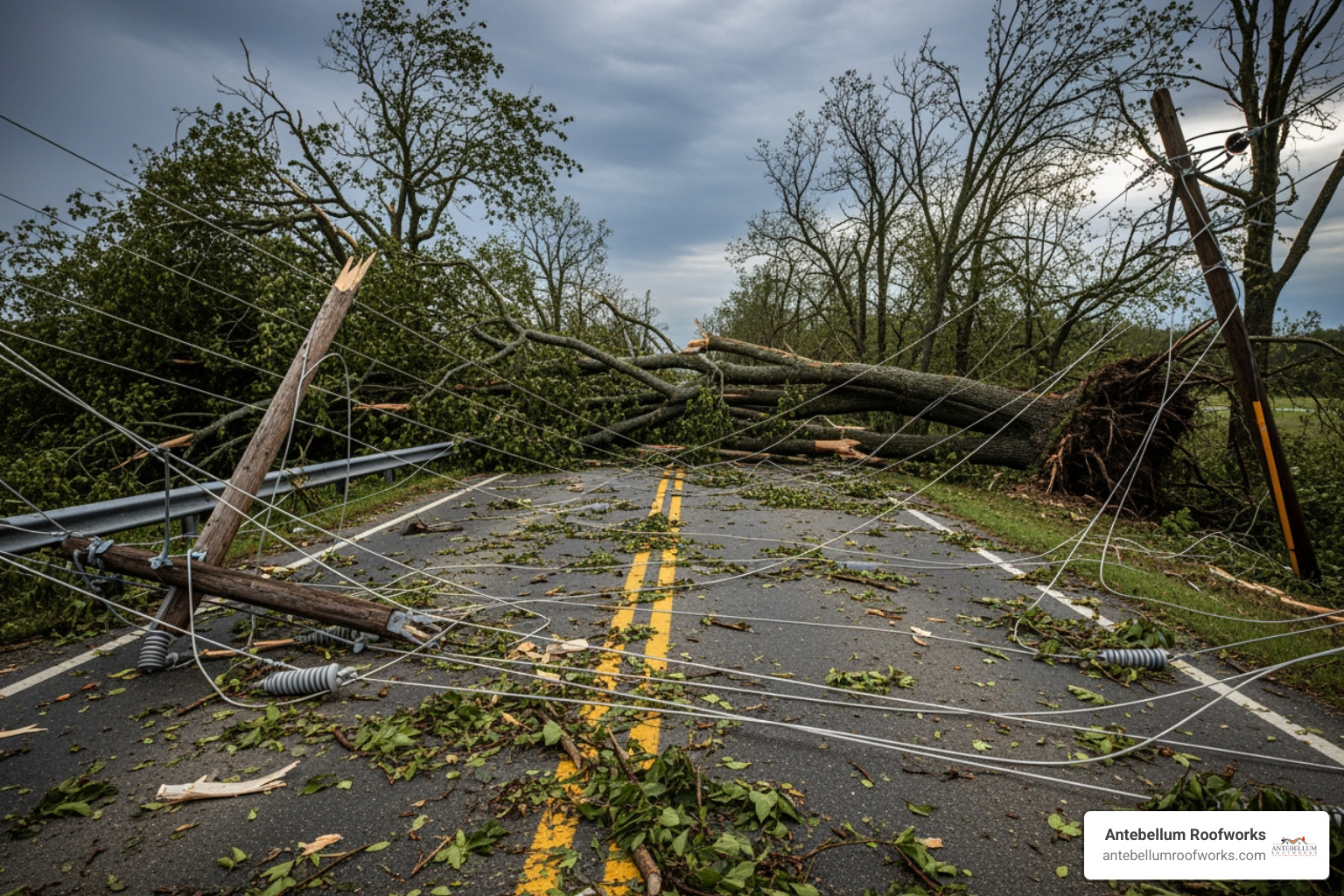
Maury County bore the brunt of the tornadic activity. An EF-3 tornado with 140 mph winds tore through rural areas between Columbia and Spring Hill, destroying numerous homes and toppling utility infrastructure along Cothran Road. The National Weather Service (NWS) confirmed this as the most intense tornado of the outbreak.
In Montgomery County, Clarksville faced record-breaking rainfall of 4.30 inches, the highest since the historic 2010 flood. This deluge submerged roads and properties, necessitating emergency water rescues. Similar flooding was reported in Sumner County, specifically in Gallatin, where floodwaters swept away vehicles.
Rutherford County and Murfreesboro reported extensive wind damage. Trees fell onto residential properties on East and West Calgary and Blackman Road, while Interstate 24 saw significant disruptions due to downed trees. In Hickman County, the roof of Hickman County Middle School was partially removed by high winds, causing internal damage to the gymnasium.
Other affected areas include Williamson County, where communities like Franklin, TN, Leiper’s Fork, and Primm Springs dealt with downed trees and road closures. For real-time updates on localized impacts, residents can consult rolling storm damage reports in Tennessee.
Analyzing the Impact of Middle TN Storm Damage
The human and financial toll of the recent Middle Tennessee storms is significant, with millions of dollars in property damage and a tragic loss of life. A total of 2 people were killed and 21 others were injured. One fatality occurred in Maury County due to a home collapse, while another occurred in Claiborne County when a tree struck a vehicle.
| County (or nearest major town) | Tornado Intensity (EF Scale) | Recorded Wind Speed (mph) |
|---|---|---|
| Maury County (Columbia/Spring Hill) | EF-3 | 140 |
| Smithville | EF-1 | N/A (estimated) |
| Lebanon (near Big Springs Road) | EF-0 | N/A (estimated) |
At the peak of the storm, 37,000 customers were without power statewide. These outages were primarily caused by downed trees and snapped utility poles. Residents can find the latest updates from the National Weather Service Nashville to stay informed on recovery progress and future threats.
Common Types of Middle TN Storm Damage
Homeowners should be aware of several common forms of middle tn storm damage that occurred during these events:
- Structural Failure: High-intensity winds caused roofs to be ripped off and homes to be shifted from their foundations, notably in Maury and Hickman counties.
- Downed Trees: Saturated ground combined with 60+ mph winds led to large trees falling on houses and vehicles.
- Hail Damage: Reports of large hail indicate potential bruising of asphalt shingles and denting of metal roofing components.
- Flash Flooding: Record rainfall in Clarksville and Gallatin led to compromised foundations and water intrusion in basements.
- Roof Blow-offs: Straight-line winds lifted shingles and siding, exposing the underlying structure to moisture.
- Gutter Detachment: Heavy rain and wind overwhelmed drainage systems, tearing gutters from fascias and leading to foundation erosion.
Essential Resources and Recovery Efforts for Residents
Recovery from widespread storm damage requires coordinated community support. Several organizations are providing immediate relief to affected Middle Tennessee residents.
- American Red Cross: Provides emergency shelter, food, and emotional support. Contact them at 1-800-RED-CROSS.
- United Way Greater Nashville: Connects residents with financial aid and volunteer opportunities. Visit United Way Greater Nashville for more information.
- Disaster SNAP Benefits: Residents who lost food due to power outages lasting 12 hours or more may be eligible for replacement benefits. Details are available via the disaster emergency assistance information portal.
- Nashville Office of Emergency Management (OEM): Coordinates generator distribution for Davidson County residents. Visit NashvilleResponds.com or call 2-1-1 for assistance.
- Hands on Nashville (HON): The primary hub for volunteer coordination, including debris cleanup and community rebuilding efforts.
For those wishing to contribute, monetary donations are encouraged for the Maury County Trustee’s Office to support the hardest-hit tornado victims. Additionally, Blood Assurance has issued a call for donors to replenish supplies after storm-related cancellations.
Navigating Insurance Claims and Repair Deadlines
Tennessee homeowners generally have a one-year deadline from the date of the storm to file an insurance claim for roof damage. While the state statute of limitations for contracts is six years, most homeowner policies include a specific clause limiting the claim window to 12 months. Missing this deadline can result in a total denial of coverage.
Prompt filing is essential to prevent insurers from attributing damage to general wear and tear. For more details, see the information on Tennessee property damage claims. When filing, ensure you have comprehensive photo and video evidence of all visible damage.
Understanding your coverage is also vital:
- Replacement Cost Value (RCV): Covers the full cost to replace damaged items with new materials.
- Actual Cash Value (ACV): Covers the depreciated value of the property based on its age.
Professional Inspections for Middle TN Storm Damage
Professional inspections are necessary because much of the damage caused by hail and wind is invisible from the ground. Our team uses HAAG-certified experts to identify subtle issues like bruised shingles, fractured sealant strips, and compromised flashing. These experts can distinguish between storm-related impact and normal aging, which is critical for a successful insurance claim.
During a professional assessment, we look for:
- Granule Loss: Indicates hail impact that shortens shingle life.
- Hidden Leaks: Identified through moisture detection in attics.
- Structural Integrity: Checking for shifted rafters or compromised decking.
- Soft Metal Damage: Dents in vents and gutters that confirm hail activity.
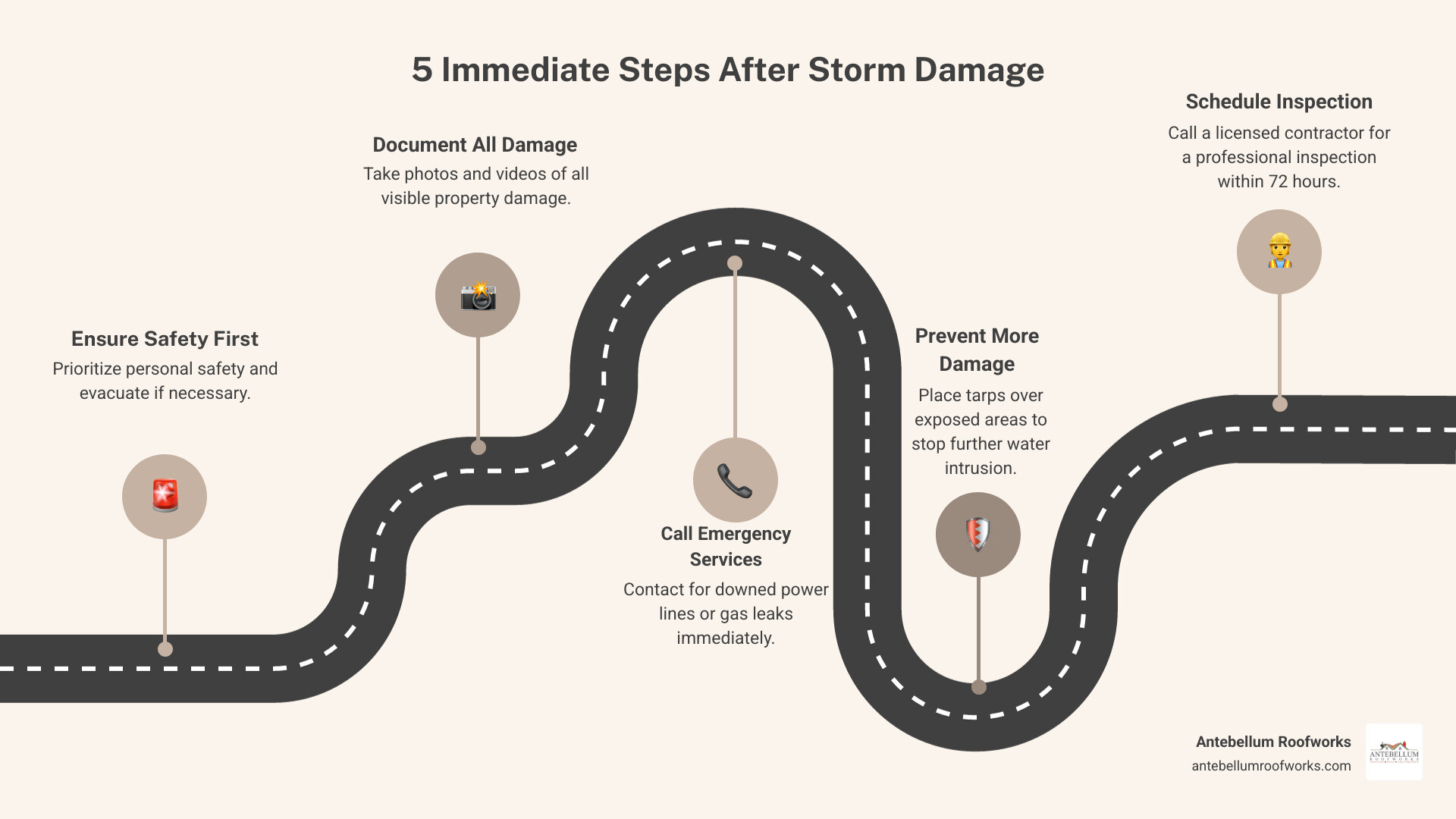
If significant damage is found, emergency tarping should be applied immediately to prevent further water intrusion. For a thorough evaluation of your property, consider scheduling professional roof inspections.
Safety Protocols and Future Weather Outlook
Safety is the priority during the post-storm recovery phase. Residents must be vigilant regarding electrical hazards and improper equipment use.
Generator Safety: Carbon monoxide poisoning is a leading cause of post-storm fatalities. Never operate a generator indoors, in a garage, or near open windows. Generators must be placed at least 20 feet away from the home. Review the Nashville Fire Department Generator Safety Video for proper operating procedures.
Electrical Hazards: Avoid “backfeeding” by never plugging a generator into a wall outlet, as this can electrocute utility workers. Always assume downed power lines are live and maintain a distance of at least 35 feet. When power is restored, turn on appliances gradually to prevent surges.
Travel and Cleanup: Monitor local hazardous weather outlooks for future threats. Check TDOT reports for road closures; state routes like SR 141 and SR 56 have recently experienced significant blockages. During debris cleanup, wear puncture-resistant gloves and sturdy boots to prevent injury from sharp objects.
Frequently Asked Questions about Middle TN Storm Damage
What areas were most affected by the recent storms?
Maury County, Clarksville, and Murfreesboro were the most heavily impacted areas. An EF-3 tornado caused severe structural damage in Maury County, while Clarksville experienced record-breaking flash flooding. Widespread wind damage and power outages also affected Davidson and Hickman counties.
How long do I have to file an insurance claim for storm damage in Tennessee?
Homeowners typically have one year from the date of the storm to file a claim. While state law allows longer for general contracts, specific insurance policy language usually mandates a 12-month window for property damage claims. It is essential to review your policy and file promptly.
What are the primary safety risks after a storm has passed?
The primary risks include carbon monoxide poisoning from improper generator use, electrocution from downed power lines or backfeeding, and injuries from unstable debris. Always place generators 20 feet from the home and treat all downed wires as live and dangerous.
Conclusion
The recent severe weather has left a lasting impact on Middle Tennessee, but timely action can mitigate long-term property loss. From documenting damage to understanding the one-year insurance deadline, homeowners must be proactive in their recovery efforts. Professional intervention ensures that hidden issues like hail bruising and structural shifts are addressed before they lead to costly interior damage.
For expert assistance with inspections and repairs, contact Antebellum Roofworks at (615) 794-9111. Our Franklin-based team provides the certified craftsmanship and local expertise needed to steer the complexities of middle tn storm damage. If you suspect your home has sustained damage, schedule your professional consultation today to protect your investment and ensure your home remains secure.