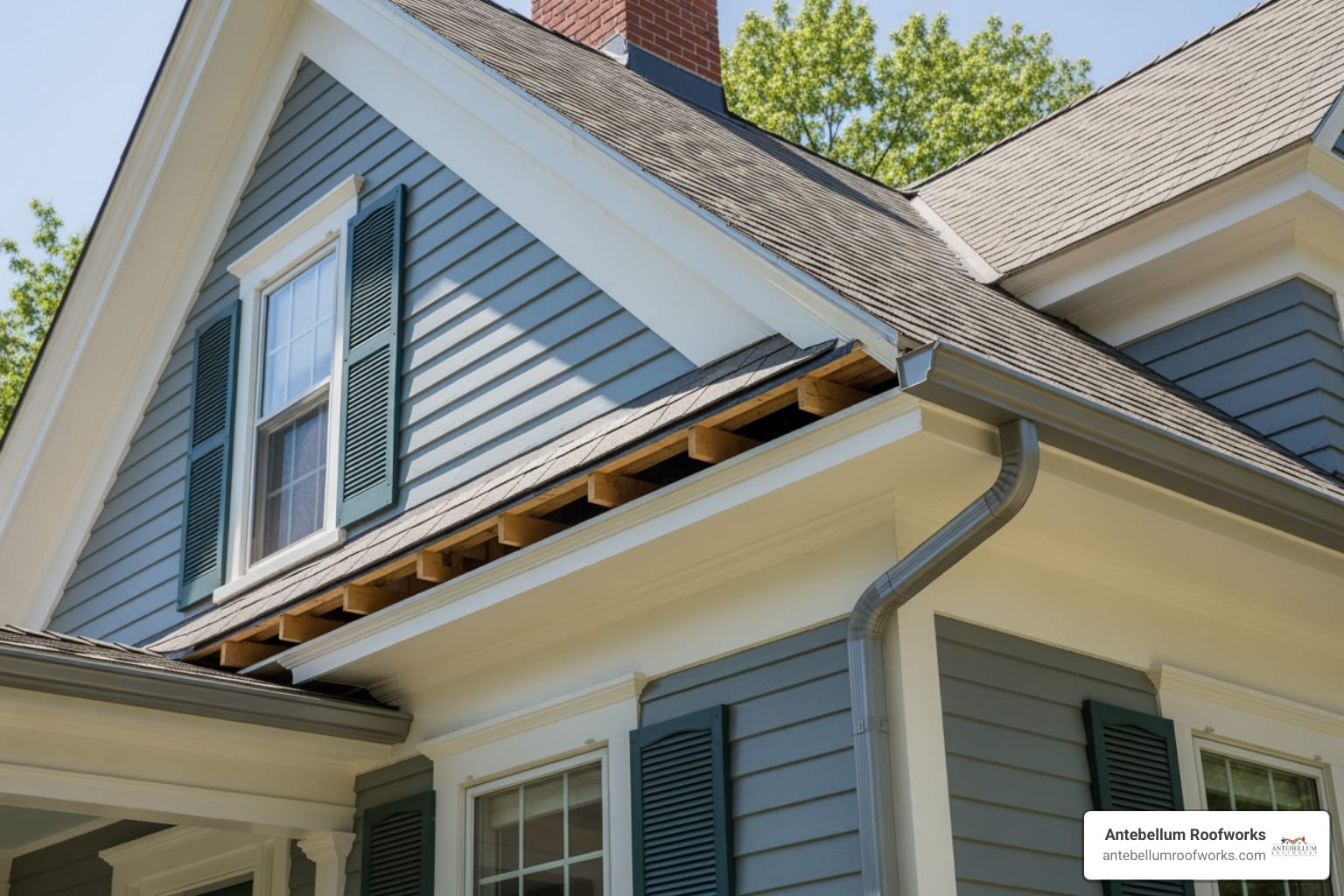

Why Roof Finials Matter for Your Home’s Character and Protection
Roof finials are decorative architectural elements that cap the peak of a roof, gable, or turret. Originally designed to weatherproof vulnerable roof apexes and add structural weight, finials have evolved into statement pieces that define a home’s character. For homeowners seeking expert roofing services to improve their property’s curb appeal, these architectural ornaments offer a unique finishing touch.
Quick Answer: What You Need to Know About Roof Finials
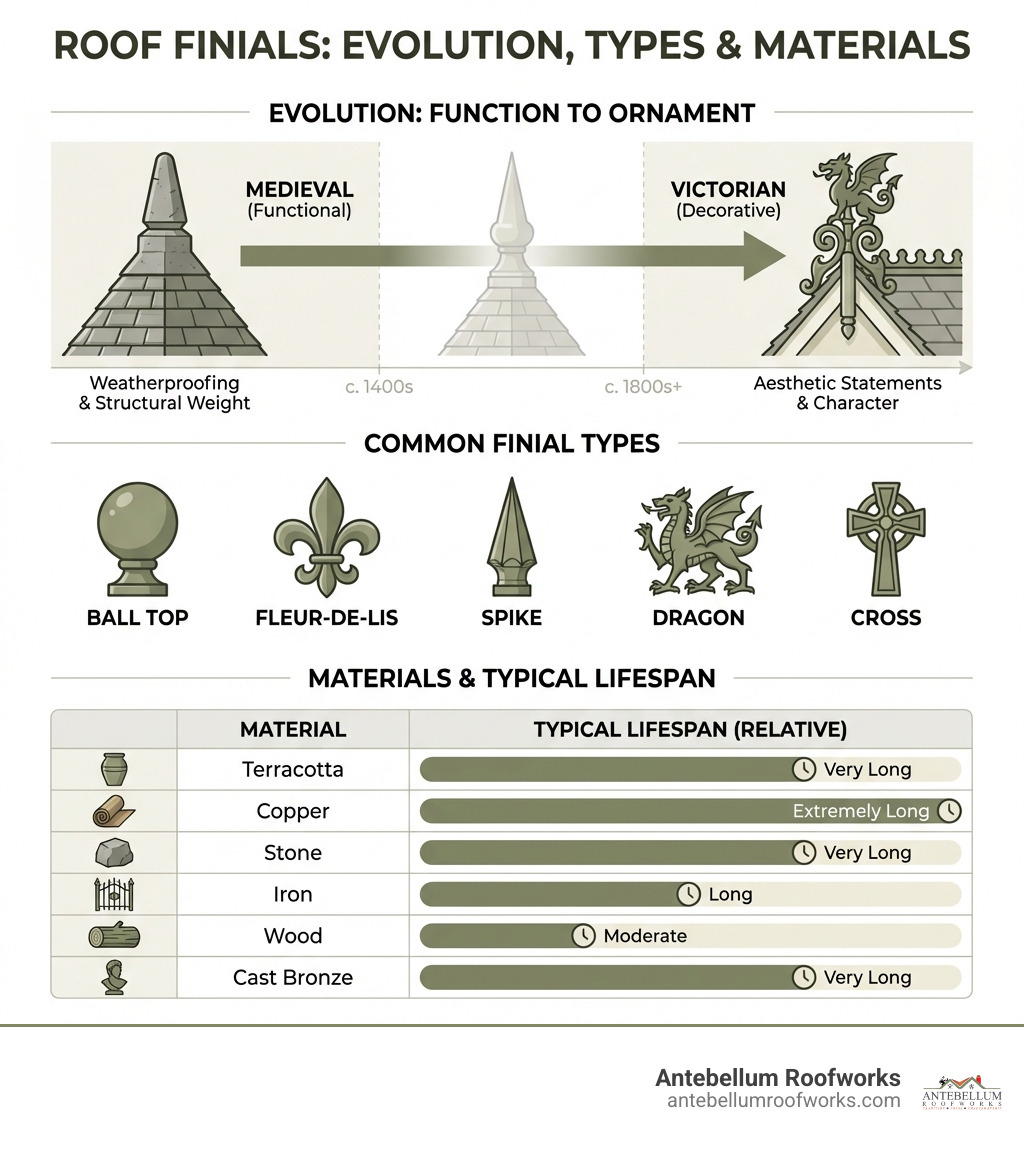
- Definition: Ornamental caps for roof peaks, from the Latin “finalis” meaning “end.”
- Function: Prevent water penetration at roof apexes and add visual interest.
- Materials: Terracotta, copper, stone, iron, wood, or cast bronze.
- Styles: Ball top, fleur-de-lis, spike, dragon, gargoyle, and custom designs.
- History: Integral to Medieval, Tudor, Gothic Revival, and Victorian architecture.
- Cost: Ranges from affordable pieces to thousands for custom designs.
- Installation: Requires professional installation; custom orders have 4-8 week lead times.
Finials serve a practical purpose. Where tiles can’t cover the peak of a conical roof, a well-fitted finial provides a crucial weatherproof seal. Their weight also helps secure roof tiles, especially on historic properties. For homeowners in Middle Tennessee, finials are an opportunity to honor architectural heritage. Whether restoring a historic home or adding character to a new build, the right finial transforms your roofline.
If you’re exploring options for your roof, the team at Antebellum Roofworks can guide you. Call (615) 794-9111 at (615) 794-9111 to discuss your project.
The History and Purpose of a Roof Finial
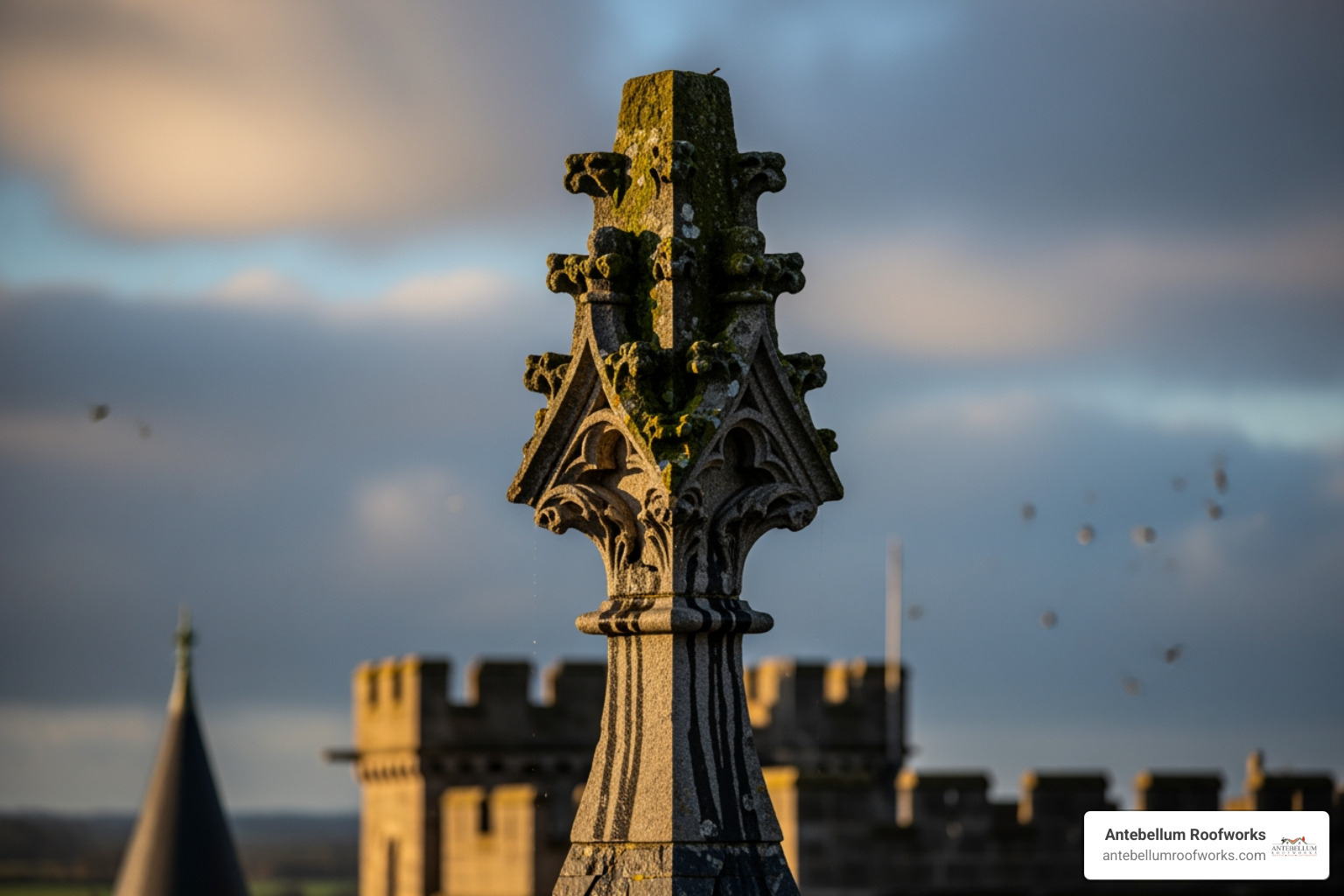
The story of the roof finial is deeply intertwined with practical necessity and symbolic expression. Far from being a mere aesthetic afterthought, finials originated as fundamental components of roof construction. The term itself, from the Latin “finalis” (end), describes the element that crowns a structure’s uppermost point. Historically, finials were the “final” piece, capping the vulnerable apex where materials like slate couldn’t provide a complete seal. This critical function prevented water entry, acting as an essential weatherproof barrier.
Beyond weatherproofing, early finials served a structural purpose. Their weight helped secure roof tiles and supporting structures, contributing to the roof’s overall stability. Before modern sealants, the finial was a simple yet effective solution to a complex architectural challenge. As building techniques advanced, the finial’s role evolved from purely functional to increasingly decorative. Architects realized this prominent point was a unique opportunity for artistic expression, changing a utilitarian cap into an elaborate art form.
Finials are integral to many architectural periods, including Medieval, Tudor, Gothic Revival, and Victorian styles. Their presence in these diverse styles speaks to their timeless appeal. In the British tradition, adorning roofs with roof finials has been customary since the 1800s, turning every rooftop into a canvas for originality.
Finials also acquired symbolic meanings. Folklore suggests finial posts were believed to prevent witches from landing on the roof, highlighting the deep cultural resonance these elements once held. Today, they continue to serve both practical and aesthetic purposes, especially in weatherproofing complex roof forms like towers and turrets. For us at Antebellum Roofworks, preserving this legacy means providing solutions that are beautiful, structurally sound, and protective for homes in Franklin, TN, and across Middle Tennessee.
Architectural Styles and Cultural Significance

The universal appeal of the roof finial transcends borders, making it a fascinating study in cultural expression. From Gothic spires to Asian temples, finials tell a story of human ingenuity, artistry, and belief.
In Western architecture, finials are synonymous with a rich mix of styles. They crowned Medieval churches, added flair to Tudor manors, and defined the Gothic Revival. During the Victorian era, their popularity soared across Italianate, Chateauesque, and Second Empire homes. The British tradition of adorning roofs with roof finials and detail since the 1800s heavily influenced American architecture, particularly in historic towns like Franklin, TN.
Eastward, finials take on different but equally significant forms. In Japan, ‘onigawara’ are sculpted roof tiles, often with ogre-like faces, believed to ward off evil spirits. Similarly, Chinese imperial buildings feature elaborate hat finials symbolizing status and spiritual protection. In Southeast Asia, the “Mahkota Atap Masjid” (mosque roof crowns) in Malacca, Malaysia, are cultural markers blending local and Islamic traditions. These finials, made of concrete or wood, are both decorative and symbolic.
Indian temples also have a rich tradition of finial artistry. The ‘Ākāśaliṅga’ finial, a crowning element on temple spires, carries deep religious significance. Even today, finials persist in modern contexts. The United States military uses distinct finials on flagpoles—spears, eagles, or balls—to symbolize honor and heritage. This global presence underscores the power of roof finials to combine beauty with meaning. Understanding this rich history allows us at Antebellum Roofworks to appreciate the cultural and architectural nuances finials bring to every property.
A Guide to Roof Finial Materials and Types
Choosing the perfect roof finial is about finding that unique crowning touch that speaks to your property’s character. This section explores the diverse materials and designs to help you select the ideal one for your Middle Tennessee home’s architecture.
Common Materials and Their Characteristics
Your material choice impacts durability, appearance, and maintenance. Here are the most common options:
- Terracotta and Clay: Classic, weather-resistant choices with natural, earthy tones that age beautifully. They blend seamlessly with traditional tile roofs.
- Copper and Iron: Copper offers timeless elegance, developing a stunning green patina over time. Iron is robust and allows for intricate, classic designs. Both are incredibly long-lasting.
- Stone and Concrete: For a grand statement, these materials offer exceptional durability and a sense of permanence. Concrete can mimic stone at a more accessible price point.
- Carved Wood: A lightweight option suitable for cupolas or gazebos, offering a warm, natural aesthetic. It requires regular maintenance to protect against weather and rot.
- Cast Bronze and Stamped Metal: Cast bronze offers incredible detail and quality. Modern stamped metal finials are primarily ornamental, available in a wide range of designs mimicking heavier materials.
Here’s a quick comparison of these materials:
| Material | Durability | Maintenance Needs | Aesthetic | Typical Cost Range |
|---|---|---|---|---|
| Terracotta/Clay | High | Low (occasional cleaning) | Natural, earthy, traditional | Moderate |
| Copper | Very High | Low (develops patina) | Classic, transforms over time | High |
| Iron | High | Moderate (rust prevention) | Robust, intricate, traditional | Moderate to High |
| Stone/Concrete | Extremely High | Very Low | Grand, permanent, classical | High to Very High |
| Carved Wood | Moderate | High (sealing, painting) | Warm, natural, rustic | Moderate |
| Stamped Metal | Moderate | Low (check for rust/dents) | Versatile, can mimic other materials | Low to Moderate |
Popular Styles of Modern Roof Finials
The variety of roof finial styles available today is immense, catering to every architectural taste.
- Classic Shapes: Timeless designs like the simple Ball Finial, the slender Spike Finial, and the neat Fleur-de-lis Finial, which symbolizes royalty and purity.
- Obelisk and Pyramid Forms: Geometric shapes that offer a sense of classical grandeur and stability.
- Figurative Designs: For a dramatic statement, choose from mythical creatures like Dragons or protective Gargoyles. These add intricate detail and unique character.
- Contemporary Trends: Modern architecture often favors minimalist and geometric designs with clean lines and abstract forms for a sleek finish.
- Custom Creations: For a truly unique vision, custom fabrication allows for unparalleled design freedom. This option ensures your finial perfectly complements your home’s character and stands as a one-of-a-kind statement piece.
The vast selection means there’s a roof finial for every style, from the classic Ball top to the symbolic Cross or Crown finials. Whatever your preference, the right finial will dramatically improve your home’s curb appeal.
Practical Guide: Choosing, Installing, and Maintaining Your Finial
A roof finial is a significant investment. Proper selection, installation, and maintenance are key to ensuring it remains a beautiful, secure feature for years. This guide provides essential tips for homeowners in Franklin, TN, and across Middle Tennessee.
How to Choose the Right Roof Finial
Selecting the perfect finial requires a thoughtful approach to ensure harmony with your home.
- Architectural Harmony: Match the finial style to your home’s architectural design. A Victorian dragon finial suits a period home, while a geometric finial fits a modern one.
- Scale and Proportion: The finial should complement, not overwhelm, your roof. A small finial gets lost on a large roof, while an oversized one can look disproportionate. Use a template to visualize the scale.
- Roof Pitch Compatibility: Finials must be compatible with your roof’s pitch. They come in various angled fittings for gables (e.g., 90/45 degree), hip end designs for converging roof planes, and half-round styles for rounded ridges. You’ll need to specify your roof pitch when ordering. Our team can help you determine the correct specifications.
Installation and Maintenance
Proper installation and care are essential for longevity.
- Professional Installation is Crucial: Working at heights and ensuring a weatherproof seal requires professional expertise. Incorrect installation can lead to leaks, instability, or safety hazards.
- Secure Attachment and Weatherproofing: A finial must be securely anchored and waterproofed with appropriate flashing and sealants to prevent water ingress. This is where a professional roofing contractor’s expertise is vital.
- Maintenance Varies by Material:
- Terracotta/Clay/Stone: Low maintenance; occasional cleaning.
- Copper: Very low maintenance; develops a protective patina.
- Iron: May require periodic inspection and rust prevention.
- Carved Wood: Requires regular sealing or painting.
Regular inspections are recommended as part of your annual roof maintenance, especially after severe weather.
- Sourcing and Lead Times: Custom-made designs often require a lead time of 4-8 weeks. Factor this into your project planning.
- Expert historical roof restoration services: For historic properties in Franklin, TN, with damaged finials, our team specializes in historical restoration. We can reproduce finials to match existing details, preserving your home’s architectural integrity.
By considering these practical aspects, you can ensure your roof finial is a stunning and durable component of your roof system.
Frequently Asked Questions about Roof Finials
Homeowners often have questions about these unique architectural elements. Here, we address the most common inquiries about roof finials.
Do roof finials serve a practical purpose today?
Yes. While highly decorative, roof finials retain a crucial practical function. They provide a vital weatherproof seal at the apex of conical, turret, or hip roofs, preventing water penetration where standard materials may leave gaps. By capping this vulnerable point, finials protect the underlying structure from moisture, preventing costly water damage and prolonging your roof’s life. They also add weight that helps secure ridge tiles, contributing to overall structural integrity.
What is the difference between a finial, a spire, and a cupola?
These terms refer to distinct architectural elements, though they can appear together.
- A finial is a decorative ornament that caps the highest point of a roof, gable, or pinnacle. It is a smaller, self-contained element for embellishment and weatherproofing.
- A spire is a much larger, tapering conical or pyramidal structure that rises from a roof or tower, adding significant height and grandeur. A finial can often be found at the very top of a spire.
- A cupola is a small, dome-like structure on top of a larger roof. Cupolas often have windows or louvers for ventilation or light. A finial can also be used to crown a cupola’s peak.
In short, a spire and a cupola are larger structures, while a finial is an ornament that can adorn either of them or cap a roofline directly.
How much do roof finials cost?
The cost of roof finials varies significantly based on material, size, complexity, and whether it’s a standard or custom piece.
- Affordable options, like small, mass-produced terracotta or stamped metal designs, can start at a few hundred dollars.
- Mid-range finials, such as more elaborate terracotta or smaller copper pieces, can cost between £220.00 to £260.00 (inc. VAT) from some suppliers, which translates to a comparable range in USD.
- High-end finials, like large, custom-made copper or intricately carved stone pieces, can cost several thousand dollars.
When budgeting, remember to include professional installation costs to ensure proper weatherproofing and longevity. Our team at Antebellum Roofworks can provide an accurate estimate for your project in Franklin, TN.
Add the Perfect Finishing Touch to Your Roof
A roof finial is more than just an accessory; it’s a statement piece that reflects a home’s history, style, and attention to detail. From the classic elegance of a fleur-de-lis to the bold statement of a dragon, the right finial can transform your roofline into a work of art. For homeowners in Middle Tennessee seeking a unique architectural element, a custom finial can lift your property’s profile, making your home a true standout.
We understand the significance of these architectural jewels and their impact on your home’s curb appeal and longevity. Whether you’re undertaking a historical restoration project in Franklin, TN, or simply wish to add timeless elegance to a newer build, our team at Antebellum Roofworks is here to guide you. We combine expert craftsmanship with a deep appreciation for architectural heritage to ensure your finial is not only beautiful but also perfectly suited to your roof and built to last.
To discuss your historical restoration or custom roofing project and explore the exquisite world of roof finials, contact the experts at Antebellum Roofworks today. Let us help you crown your home with style and distinction.